Cannabis Law, Regulations, and Reciprocity Programs in the U.S.
Cannabis Law, Regulations, and Reciprocity Programs in the U.S.
Medical cannabis is now legal in 34 states plus the District of Columbia and four U.S. territories: Guam, Northern Mariana Islands, Puerto Rico, and the U.S .Virgin Islands.Medical Cannabis in the United StatesAs of June 25, 2019, these jurisdictions have approved a comprehensive, publicly available, adult-use medical cannabis program.
Alaska
Arizona
Arkansas
California
Colorado
Connecticut
Delaware
District of Columbia
Florida
Guam
Hawaii
Illinois
Iowa
Louisiana
Maine
Maryland
Massachusetts
Michigan
Minnesota
Missouri
Montana
Nevada
New Hampshire
New Jersey
New Mexico
New York
North Dakota
Northern Mariana Islands
Ohio
Oklahoma
Oregon
Pennsylvania
Puerto Rico
Rhode Island
U.S. Virgin Islands
Utah
Vermont
Washington
West Virginia
 Upclose photo of green and purple marijuana bud; image by Esteban Lopez, via Unsplash.com.
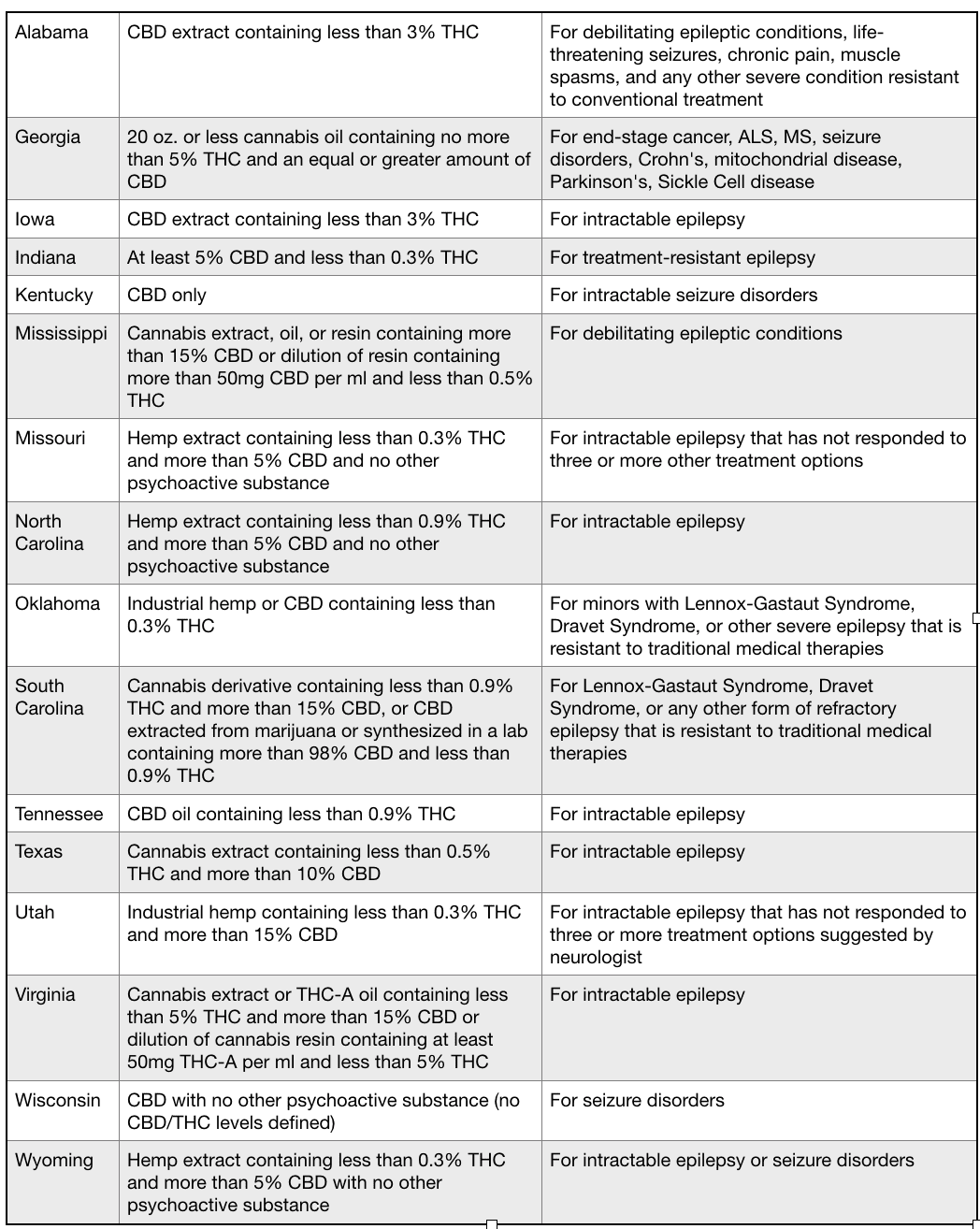 Cannabis Reciprocity Program in the United StatesMMJ card reciprocity programs allow you to use your medical marijuana card out of state. There are currently 17 states that accept out-of-state marijuana authorizations. Each jurisdiction has its own set of conditions for MMJ card reciprocity.
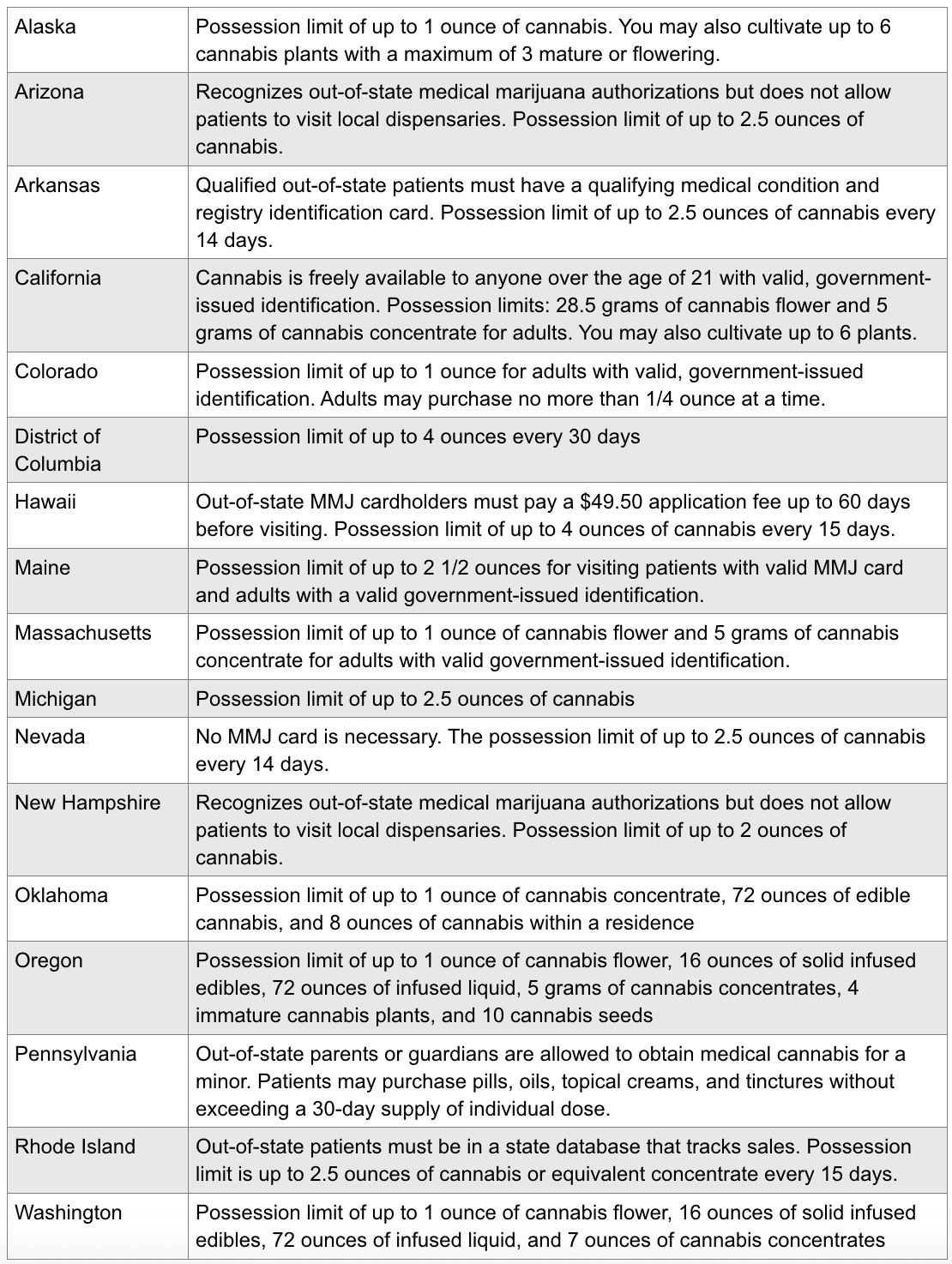 Federal Laws on CannabisMarijuana is still classified as a Schedule I substance, which means the prescription is prohibited, and distribution is considered a federal offense. Medical marijuana "prescriptions" are called recommendations, authorizations, or referrals instead.You can still be arrested even if you have a medical marijuana card, especially if you violate the possession limits of an MMJ card reciprocity program. It is vital that you research and plan carefully before purchasing medical marijuana out of state. You should carry your MMJ card and your doctor's recommendation with you at all times to help you fight charges in case you get into trouble with law enforcement.
About Gracie Evans
Gracie Evans is a writer on HazyMarketing focused on medical marijuana and its health effects. She began writing in this space after graduating from UNLV School of Medicine. Her main goal is to share her knowledge with people with medical conditions marijuana can help to treat.