
How Green Are Those New Cassava Bags?
How Green Are Those New Cassava Bags?
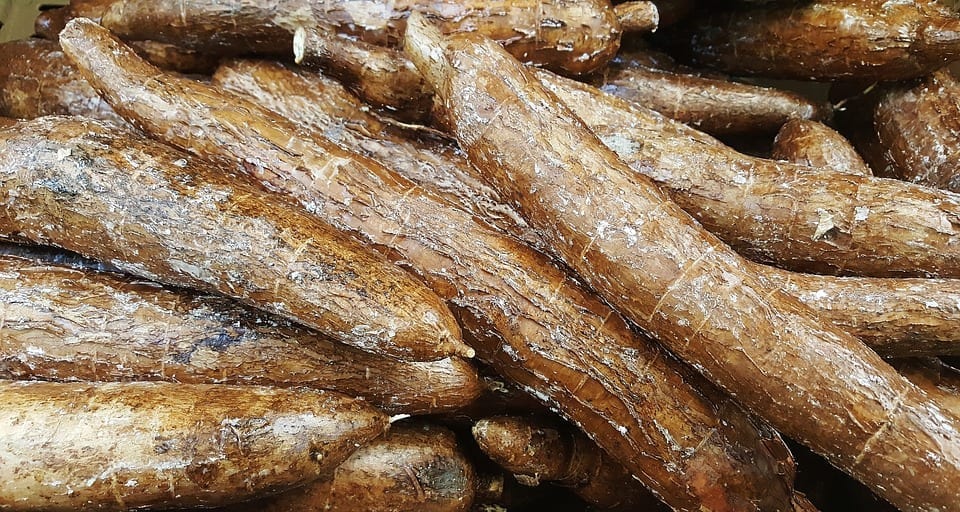
Southeast Asia is awash in plastic waste. Strong economic growth combined with the usual suite of externalities (that is, it would have cost somebody something to clean up all that plastic) means that Balinese beaches and the bellies of sea creatures alike are filling up with plastic flotsam. One Indonesian entrepreneur is looking to solve the problem by using cassava, a fast-growing and inexpensive food crop, to formulate a new take on the ubiquitous plastic shopping bag. But how green are these new cassava bags? Let's take a look.Kevin Kumala started studying the manufacture of bioplastics after he and a friend sat at a bar watching traffic pass by in a rainstorm. All at once, he realized that the cheap, disposable plastic ponchos that the motorcyclists were wearing would be used, at best, a few times before they were thrown away, but that they would never really decompose. Unless it's been incinerated, all the plastic we've ever used is still with us, somewhere. In coastal areas, like Indonesia, light plastic waste often finds its way into the surrounding sea. It looks terrible, but even worse, it's a danger to ocean animals, and works its way back up the food chain to us.Kumala eventually launched Avani Eco, a company that began manufacturing alternative rain ponchos made from bioplastic. Unlike the usual kind of plastic, which is made from petrochemicals and requires oil or natural gas as a feedstock, bioplastics rely on renewable materials such as corn, soy, or in this case, cassava and vegetable oil. Avani Eco branched out from the poncho business and now makes “plastic” bags. These cassava bags are designed to decompose over a period of several months when exposed to the elements, but also dissolve quickly in hot water. Kumala has demonstrated their nontoxic qualities by melting them in water and drinking the result.While 10 out of 10 sea turtles would rather nom on one of Kumala's cassava bags than on its petrochemical equivalent, will bioplastics solve other problems for our planet? On the surface, they seem like a step in the right direction. However, bioplastics have their own problems, which are seldom given due consideration by those whose consciences are eased by the presence of a seemingly ecological alternative to standard plastic.One thing to watch out for is how these cassava bags (and other bioplastic materials) actually cycle through the waste stream. Nothing like this plastic decays in a landfill, of course. Some bioplastics are not actually degradable, and the ones that are theoretically compostable require the high temperatures and frequent turning of an industrial composting facility. Home composting will not work. When bioplastics are tossed in with the rest of the plastic recycling stream, they interfere with recycling that batch of plastic, or result in a lower quality recycled product. Adding yet another fringe form of plastic to the recycling stream complicates the process, and none of the other solutions are very good, either. If we wanted to create a kind of plastic for which the best disposal option really is to throw it in the ocean or tangle it in a tree, this may be it.
 Zane Selvans cycled this corn-based "compostable" bioplastic cup through his hot, active home compost pile for two years, and as you can see, not much has changed. Photo by Zane Selvans, via Flickr. CC BY-NC-SA 2.0
Sources:
Cassava bags: Indonesian entrepreneur tackles plastic scourge
Plastic you can drink: A solution for pollution?
Farming school will help African communities
Research shows how to grow more cassava, one of the world’s key food crops
Cassava is genetically decaying, putting staple crop at risk
Cassava: Key to overcoming Nigeria’s reliance on food imports
Will bioplastics repeat the biofuels saga?
Cassava Starch Market: Global Industry Trends, Share, Size, Growth, Opportunity and Forecast 2017-2022
How does bioplastic recyclability compare with petrochemical-based plastic recyclability?

About Dawn Allen
Dawn Allen is a freelance writer and editor who is passionate about sustainability, political economy, gardening, traditional craftwork, and simple living. She and her husband are currently renovating a rural homestead in southeastern Michigan.