
Categories | News & Politics
Article
Class Action Lawsuit Filed Against DOCCS and OMH for Illegally Keeping Prisoners with Disabilities in Solitary Confinement
May 22nd, 2024
•
News & Politics
•
7 minute read
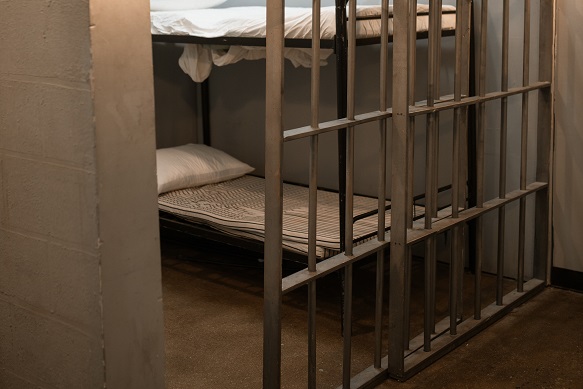
Class Action Lawsuit Filed Against DOCCS and OMH for Illegally Keeping Prisoners with Disabilities in Solitary Confinement
New York, NY—The Legal Aid Society, Disability Rights Advocates, and Winston & Strawn LLP filed a class action lawsuit on behalf of incarcerated New Yorkers with disabilities against the New York State Department of Corrections and Community Supervision (“DOCCS”) and the New York State Office of Mental Health (“OMH”) for their ongoing violations of the Humane Alternatives to Long-Term Solitary Confinement Act (“HALT”), legislation that went into effect on March 31, 2022 and that drastically reduces the permissible use of solitary confinement in prisons and jails throughout New York State. Read the complaint. HALT prohibits prison and jail officials from placing incarcerated people with disabilities in solitary confinement. HALT’s protections are grounded in the broad scientific consensus that individuals with disabilities are particularly vulnerable to the disastrous and frequently irreversible medical and psychological consequences wrought by solitary confinement, and the growing penological consensus that solitary makes prisons less safe.Despite this, DOCCS and OMH have continued to subject numerous people with disabilities to solitary confinement, which is defined under HALT as “any form of cell confinement…for more than 17 hours a day.”Additionally, since HALT’s implementation, DOCCS and OMH have instituted policies that allow DOCCS to place in solitary confinement people with disabilities, including post-traumatic stress disorder (PTSD), depression, cerebral palsy, epilepsy, speech disabilities, mobility disabilities requiring the use of walkers or canes, and people who are hard of hearing or have low vision —in clear violation of HALT’s broad protection for all people with disabilities.Background on Certain PlaintiffsMaurice AnthonyMaurice Anthony is a 42-year-old Black man who has been incarcerated by DOCCS since 2014 and is legally blind. DOCCS has approved him to receive accommodations for his disability. Despite HALT exempting people with vision disabilities from solitary confinement, DOCCS has subjected Mr. Anthony to solitary for virtually the entire period since HALT went into effect on March 31, 2022.During long stretches of time while Mr. Anthony was housed at Mid-State Correctional Facility from October 2021 to May 2023, DOCCS confined him to his cell for between 19 to 20 hours per day on Mondays through Thursdays. On Fridays, weekends, and most holidays, DOCCS locked him in his cell for 22 to 23 hours each day.DOCCS again held Mr. Anthony in solitary confinement in a Residential Rehabilitation Unit (RRU) at Upstate Correctional Facility from May 2023 to January 2024. RRUs are units created under HALT that were intended to replace solitary confinement with therapeutic programming, but which DOCCS has operated as a form of de facto solitary by failing to provide sufficient out-of-cell time or programming.Since January 2024, DOCCS has held Mr. Anthony in his cell for approximately 20 hours per day in a so-called “Diversion Unit,” another supposed alternative to solitary confinement at Wende Correctional Facility.Mr. Anthony compared the experience of solitary confinement to torture, stating it was like being caught “in a trunk” or a “casket” where “you can’t get out.” According to the lawsuit, this extreme confinement and isolation caused him to endure blackouts, hopelessness, claustrophobia and extreme frustration.Andy GnecoAndy Gneco is a 39-year-old Black and Hispanic man who has been incarcerated by DOCCS since 2019 and whom DOCCS held in solitary confinement despite his hearing and mental health disabilities. Under DOCCS and OMH’s policies, his disabilities are not exempt from solitary confinement, despite being exempt under HALT. Mr. Gneco was held in solitary confinement, including in the Special Housing Unit (“SHU”) while he was incarcerated at Auburn and Clinton Correctional Facilities, during which time he was locked in his cell for approximately 22-24 hours per day. According to the lawsuit, the isolation and sensory deprivation — including forced isolation from his young daughter — exacerbated Mr. Gneco’s depression and anxiety, leading to feelings of hopelessness, frustration, and hypervigilance.Stephanie PeñaStephanie Peña is a 23-year-old Black and Hispanic woman who has been incarcerated by DOCCS since 2022 and has mental health disabilities, including PTSD and antisocial personality disorder. DOCCS has also repeatedly placed her in solitary confinement while incarcerated. Ms. Peña stated that solitary confinement is “destroying [her]” and has caused her to experience drastic mood swings, as well as exacerbated symptoms associated with her PTSD including nightmares and flashbacks.Ms. Peña’s mental health drastically declined while in solitary confinement, and she said that while incarcerated, she lives in constant fear that any misstep or perceived disobedience will result in her being subjected to solitary.“HALT was intended to prevent the deep damage that people with disabilities often suffer when they are subjected to solitary confinement,” said Stefen R. Short, Of Counsel for the Prisoners’ Rights Project at The Legal Aid Society. “DOCCS and OMH have unlawfully refused to recognize a number of disabilities as exempt under HALT, leading to even more incarcerated New Yorkers languishing in solitary confinement to their own detriment. This class action lawsuit seeks to hold both DOCCS and OMH accountable for ignoring duly enacted law and for putting the most vulnerable people in their care in harm’s way.”
 Prisoner holding photograph; image by RODNAE Productions, via Pexels.com.

About Press Release
This post is an authorized copy of a press release and was not written by LegalReader.