
Categories | News & Politics Article

Combat Soldiers are at High Risk of Opioid Addiction, Overdose
October 24th, 2019 News & Politics 3 minute read
Article Image

Combat Soldiers are at High Risk of Opioid Addiction, Overdose

It has been well-documented for years that the pressures of being on the front lines of combat and the pain of the injuries endured makes service men and women, active or vets, especially susceptible to opioid addiction.  Those in active combat are at a higher risk than soldiers who’ve been deployed but were never in the middle of battle, according to a new study published by the National Bureau of Economic Research (NBER) titled “Did the War on Terror Ignite an Opioid Epidemic?”NBER found that opioid abuse “among combat-exposed veterans was 7 percentage points higher than among those who deployed but didn’t see combat.”  As far as heroin use, the agency says combat also made soldiers higher risk for use and addiction – more than 1 percentage point higher than who did not experience the horrors of battle.  The results are the first to “estimate the causal impact of combat deployments in the Global War on Terrorism on opioid abuse,” according to the study.
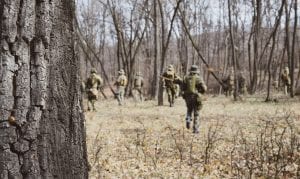
Combat Soldiers are at High Risk of Opioid Addiction, OverdosePhoto by Daniel Balaure on Unsplash

Resul Cesur, associate professor of healthcare economics at the University of Connecticut, said he and his associates, Joseph Sabia, professor of economics at San Diego State University, and W. David Bradford, in the Department of Public Administration and Policy at the University of Georgia, wanted to better understand the impact of the war following the tragedies of 9/11 on the opioid crisis.  He said they referenced a 2010 study that explored the connection between post-traumatic stress disorder (PTSD) and direct combat.  That data showed those who had PTSD symptoms had also reported taking opioid drugs.“We have an opioid epidemic in the military population.  That is well known.  And nearly three million deployed since 9/11, so what is the impact of this combat?” Cesur asked. “We wanted to know if it was driven by combat or by some other selection factor.  For example, are people who are prone to opioid abuse drawn to enlist?...Our evidence shows strong evidence that the reason why so many military people are using opiates is because they are exposed to combat.”The authors found approximately “one third of opioid abuse among service members and veterans could be explained by a war injury” and roughly “58 percent of all heroin abuse could be linked to a war injury.”  Use is relatively rare in the military, but highest amongst those who serve in the Army and Marine Corps.  The Air Force and Navy had the lowest rates.Experts have documented an increase in opioid use disorder following the deployment of troops to Afghanistan.  Those most susceptible to combat related mental health disorders and, often comorbid, substance use, have been those who enlisted and deployed.  The NBER study estimated the economic impact of opioid addiction among service members is roughly $1 billion a year, and for heroin, $470 million.“These are likely to be the lower estimates of the economic impact of combat on treatment-related expenses,” Cesur said.The authors suggest that medical marijuana is a safer, less addictive, alternative to opioids.“While marijuana legalization is certainly not a silver bullet, evidence that marijuana and opioids are substitutes suggests that access to medical marijuana may provide an alternative, less addictive, and less unhealthy means of treating pain,” they wrote.Cesur added, “Opioids are deadly.  There’s convincing evidence that use of medical marijuana may be an alternative.”

Sources:

Combat troops at higher risk for opioid and heroin abuse, study saysCombat troops at higher risk for opioid, heroin addiction, study says

Sara E. Teller

About Sara E. Teller

Sara is a credited freelance writer, editor, contributor, and essayist, as well as a novelist and poet with nearly twenty years of experience. A seasoned publishing professional, she's worked for newspapers, magazines and book publishers in content digitization, editorial, acquisitions and intellectual property. Sara has been an invited speaker at a Careers in Publishing & Authorship event at Michigan State University and a Reading and Writing Instructor at Sylvan Learning Center. She has an MBA degree with a concentration in Marketing and an MA in Clinical Mental Health Counseling, graduating with a 4.2/4.0 GPA. She is also a member of Chi Sigma Iota and a 2020 recipient of the Donald D. Davis scholarship recognizing social responsibility. Sara is certified in children's book writing, HTML coding and social media marketing. Her fifth book, PTSD: Healing from the Inside Out, was released in September 2019 and is available on Amazon. You can find her others books there, too, including Narcissistic Abuse: A Survival Guide, released in December 2017.

Related Articles