Current US Business Insurance Requirements

Current US Business Insurance Requirements
Business insurance for businesses and formal establishments means the protection against unexpected costs that may potentially arise with the practice of running a business. In the world that we live in, accidents, natural disasters, and lawsuits are all probable factors to take into consideration when running any type of business. These tragic circumstances that may arise come with the possession of any specific company and have the potential to destroy the business financially should it not be legally insured, protected and secured with the right insurance. In order to maintain and secure any startup, it is essential for business owners to potentially obtain the best small business insurance. Necessary Insurance RequirementsAvoiding risk is a critical component of operating any type of establishment. The best small business insurance policies would be the ones that warrants the best coverage for what needs to be insured, offers the best affordability that doesn't cause the business a lot of capital, and has excellent customer service for any insurance support a company may potentially need along the way. Each unique business would expect different requirements in order to determine what would be the best fit for any specific business model, in saying that all insurance policies and companies may differ and come with their own advantages and disadvantages. When choosing an insurance company, The Really Useful Information Company (TRUiC), advises that business owners should consider elements that come down to combining and connecting what needs to be insured, what the business or service requires, and which insurer offers the best small business insurance quote. Each unique business model may require insurance providers to analyze which companies serve the types of businesses they best fit. Types of Business Insurance In most states, it is understood that businesses should acquire worker's compensation insurance once they have made the initial progress of hiring their first employee. Workers' compensation insurance usually covers aspects such as medical costs as well as potentially lost wages for factors that include work-related injuries and illnesses. For almost all companies and institutions with employees in the United States, workers' compensation is not an optional requirement. Unemployment insurance (UI) is a type of state-provided insurance that pays dismissed or unoccupied individuals every week when they potentially lose their job and meet specific eligibility requirements. Unemployment insurance may only apply to individuals who have been separated from their job due to lack of work and at no fault of their own. Each individual state may administer different and unique UI programs, as per federal law. Another legal claim of a working-class citizen is the right to disability insurance, which may be described as a type of insurance product that provides an income should a policyholder be prevented from working and earning due to a disability. Disability insurance may potentially be available through either or both public and private programs.
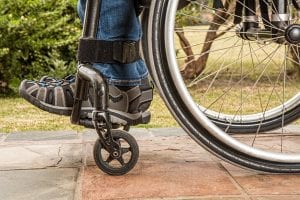 Wheelchair; image courtesy of stevepb via Pixabay, www.pixabay.com
About Elizma Burger
Elizma Burger is a journalist with a passion for travel and entertainment. She cares about the environment as well as equality and prosperity in the digital economy. She is a Newstrail interviewer for business executives around the world.