
Customs and Border Protection Seizes 64-Year Old Immigrant's Life Savings in Cleveland
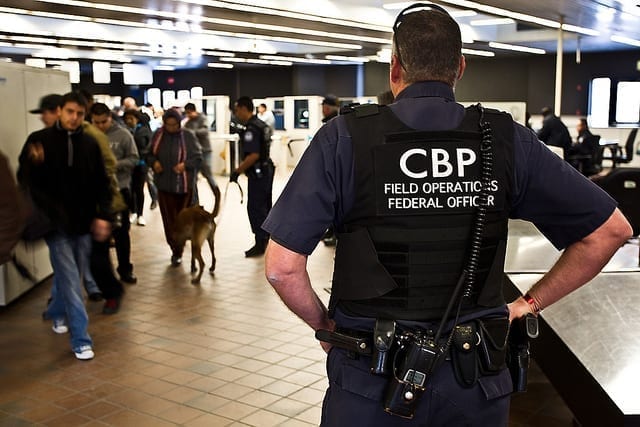
Customs and Border Protection Seizes 64-Year Old Immigrant's Life Savings in Cleveland
A 64-year old man from Cleveland, Ohio, is suing U.S. Customs and Border Protection after officials confiscated his life savings at an area airport.Customs agents, writes The Washington Post, seized the money in October through a process known as civil forfeiture. Under the statute, authorities can confiscate cash and property from individuals—regardless of whether they’re ever charged with a crime or arrested.According to the Post, the practice is widespread at a federal level. Often employed to freeze assets associated with illicit activity, authorities seized nearly $2 billion in assets from people last year — ‘a net loss similar in size to annual losses from residential burglaries in the United States.’Government officials claim the plaintiff, Rustem Kazazi, was carrying $58,000 from Cleveland to his home country of Albania for all the wrong reasons. In a statement issued by the Customs and Border Patrol, the agency maintains that Kazazi was involved in drug smuggling, human trafficking or white-collar crime.Kazazi, for his part, denies the allegations against him. His attorney and family have been quick to point out that the government never filed a formal complaint.Rustem’s son, Erald, says his father had been living in the United States since 2005. A former officer in Albanian law enforcement, he immigrated to America after being selected by the State Department’s Diversity Visa Program—frequently referred to as the ‘green card lottery.’After only five years in the United States, the family applied for and were granted U.S. citizenship.Twelve years of hard work led Rustem to save up tens of thousands of dollars. He’d intended to return to Albania and buy a vacation home for himself and his wife. Trying to navigate the hurdles of international currency exchange and banking regulations, Kazazi opted to make the purchase with cash.“While he was traveling domestically, he was carrying all his life savings,” said Erald, translating for his father.The elder Kazazi knew that passengers traveling with tens of thousands of dollars inevitably attract attention from authorities. Under federal law, individuals transiting through American airports on international flights are required to declare cash sums greater than $10,000. Kazazi was prepared—he’d separated the cash into three separate piles, each wrapped in paper with a sum written atop the envelopes.Confused by vague regulations, Kazazi says he wasn’t sure whether he needed to declare the cash in Cleveland or before transferring to his international connection in Newark. He opted for the latter, causing officials in Cleveland to take his savings.In a statement recorded by the Post, the CBP said that “pursuant to an administrative search of Mr. Kazazi and his bags, TSA agents discovered artfully concealed U.S. currency. Mr. Kazazi provided inconsistent statements regarding the currency, had no verifiable source of income and possessed evidence of structuring activity.”
 Image via 401(k) 2012/Flickr. (CCA-BY-2.0).
Sources
A 64-year-old put his life savings in his carry-on. U.S. Customs took it without charging him with a crime.Albanian-American man suing Customs and Border Protection after they seize his life savings without charging himUS customs reportedly took away a man's life savings of $58,000 — even though he was never charged with a crime
About Ryan J. Farrick
Ryan Farrick is a freelance writer and small business advertising consultant based out of mid-Michigan. Passionate about international politics and world affairs, he’s an avid traveler with a keen interest in the connections between South Asia and the United States. Ryan studied neuroscience and has spent the last several years working as an operations manager in transportation logistics.