
Decarbonization in the Shipping Industry: 2021 Outlook
Decarbonization in the Shipping Industry: 2021 Outlook
In 2018, the UN International Maritime Organization set a goal to cut the maritime shipping industry’s greenhouse gas emissions by at least half by 2050. Through decarbonization — the reduction of carbon — marine shipping companies are tasked with lowering CO₂ emissions as much as possible.Last year, the pandemic’s disruption to maritime transportation brought this goal within closer reach. But, as normal trade resumes, the shipping industry must make a conscious effort to meet new targets drafted by the Marine Environment Protection Committee at the end of 2020. The MEPC is committed to trying to help cut maritime shipping carbon emissions by 40% – as compared to 2008 levels – by 2030.This year, we expect numerous regulatory bodies to join the MEPC in a renewed focus on reducing carbon emissions and carbon intensity caused by all ocean freight carriers. The EU, for instance, is considering implementing a regional Emissions Trading System (ETS), which would enforce more rigorous standards than the MEPC goals. Maritime shipping and logistics companies must prepare to take climate change policies seriously — and here are some ways to get started.Progress toward decarbonization goalsIn early 2020, progress toward the IMO GHG Strategy had stagnated. As one research paper from the University of Cagliari explained, “Though the direction of the Strategy is clear, the path to implementation remains uncertain. The ambitious IMO’s target calls for widespread uptake of lower and zero-carbon fuels, in addition to other energy efficiency measures, including operational and market ones.”Then, the pandemic disrupted business as usual for ocean freight logistics companies around the world. In April, daily global carbon emissions dropped by 17% in part due to the global slowdown in shipping, transportation, and logistics. COVID-19 proved to be a double-edged sword for decarbonization efforts. On one hand, carbon emissions dropped during lockdown periods. On the other hand, the marine shipping industry was unable to work to achieve technological changes that would have a sustainable, long-term impact on lowering carbon emissions.5 ways to implement the IMO GHG StrategyOne good thing to come from 2020 was a deeper examination into feasible ways the maritime shipping industry could implement decarbonization measures to reduce carbon intensity. There are, luckily, plenty of steps ocean freight logistics companies can work toward the IMO 50% target in ways that satisfy both policymakers and shareholders.These steps are grouped into four categories:
Technological measures: For instance, change the fuel quality by using low-sulfur fuel oil; switch to alternative fuel options; invest in cleaning equipment; reassess ship design (for things like hull optimization, or the use of kites to save fuel).
Operational measures (fleet-related): Things like speed management, route planning, and voyage optimization to maximize safety and fuel efficiency.
Market-based measures: Economic mechanisms such as taxes, incentives, and green shipping credits.
Management measures and “Decision Support Models”: This includes things like network design, fleet deployment, berth allocation, scheduling optimization, and vessel routing.
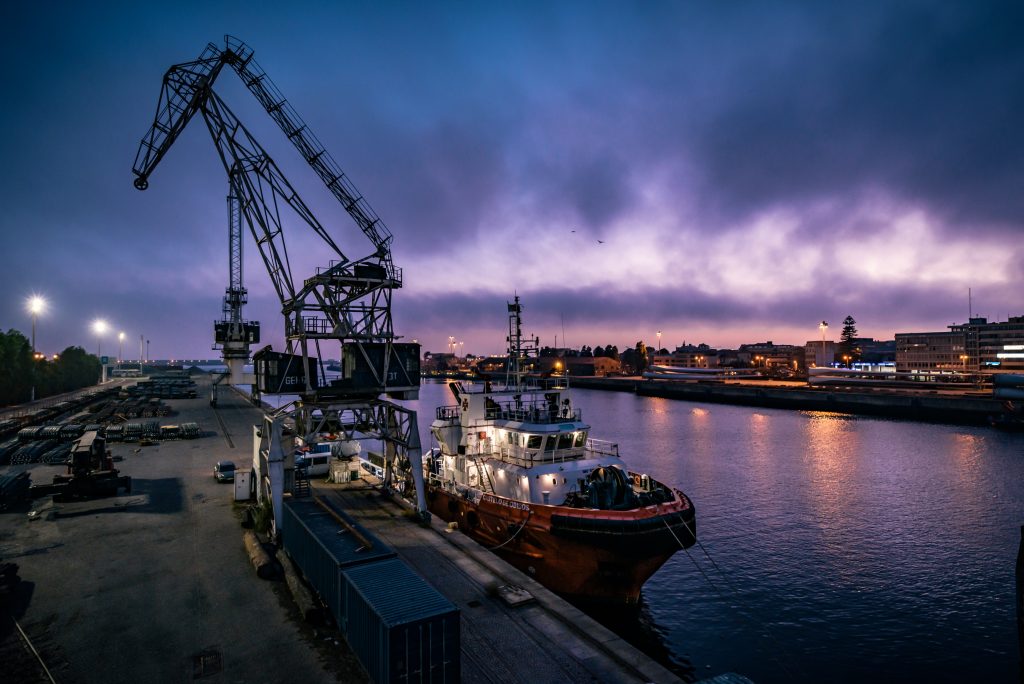 Image by Maksym Kaharlytskyi, via Unsplash.com.

About Emily Heaslip
Emily wrote this piece for Sofar Ocean, a company whose goal is to create a data-abundant ocean and provide critical insights to science, society, and industries. As a first step, we deploy and grow the world’s largest real-time ocean weather sensor network which provides the most accurate marine weather information and forecasts to power industry-specific solutions. Sofar believes that more and better ocean data will contribute to greater understanding of our environment, better decisions, improved business outcomes, and ultimately contribute to a more sustainable planet.