
Drug Recognition Experts Are Accurate, But Maybe Not Accurate Enough
Drug Recognition Experts Are Accurate, But Maybe Not Accurate Enough
There’s been a lot of concern that police don’t have an easy, accurate way to test drivers for impairment due to marijuana like they do for alcohol. What’s less well known is that they don’t have a similar test for opioids, methamphetamines, or many other intoxicating substances, either.In several states—including California, Colorado, and Michigan—trials are underway using mouth swabs and may be able to determine levels of a half-dozen drugs, not just the presence of drugs. A variety of other methods are in various stages of development, including breathalyzers.Until then what may be the best method available originated, as so many things do, in Los Angeles, California. It may not be good enough.According to the International Drug Evaluation and Classification (DEC) Program, in the early 1970s “two LAPD sergeants collaborated with various medical doctors, research psychologists and other medical professionals to develop a simple, standardized procedure for recognizing drug influence and impairment,” with formal recognition in 1979.They came up with the Drug Recognition Expert (DRE) Program. While Alcoholics Anonymous and Narcotics Anonymous are 12-step programs designed to assist substance abusers into recovery (and many rehabs incorporate them, such as California’s Chapters Capistrano 12 Step Program), DRE is a 12-step program to detect drugged drivers.The National Highway Traffic Safety Administration (NHTSA) came on board in the 1980s. Now DREs are certified by the International Association of Chiefs of Police (IACP), which sets uniform standards for these DREs.A DRE is an officer trained to observe and evaluate driver behavior behind the wheel and outside the vehicle using 12 steps. Though some deride them as “drug whisperers”, their track record seems to be around 85 %.They conduct a 12-step exam, sometimes called a Drug Influence Evaluation (DIE) or, confusingly, a Drug Recognition Exam (DRE), which includes checking blood alcohol content, examining eyes for pupil size and other conditions, typical drunk driver balance and coordination tests (walking, standing on one leg, finger-to-nose), looking for track marks indicating intravenous drug use, and urine, blood, or saliva tests, then form an opinion.
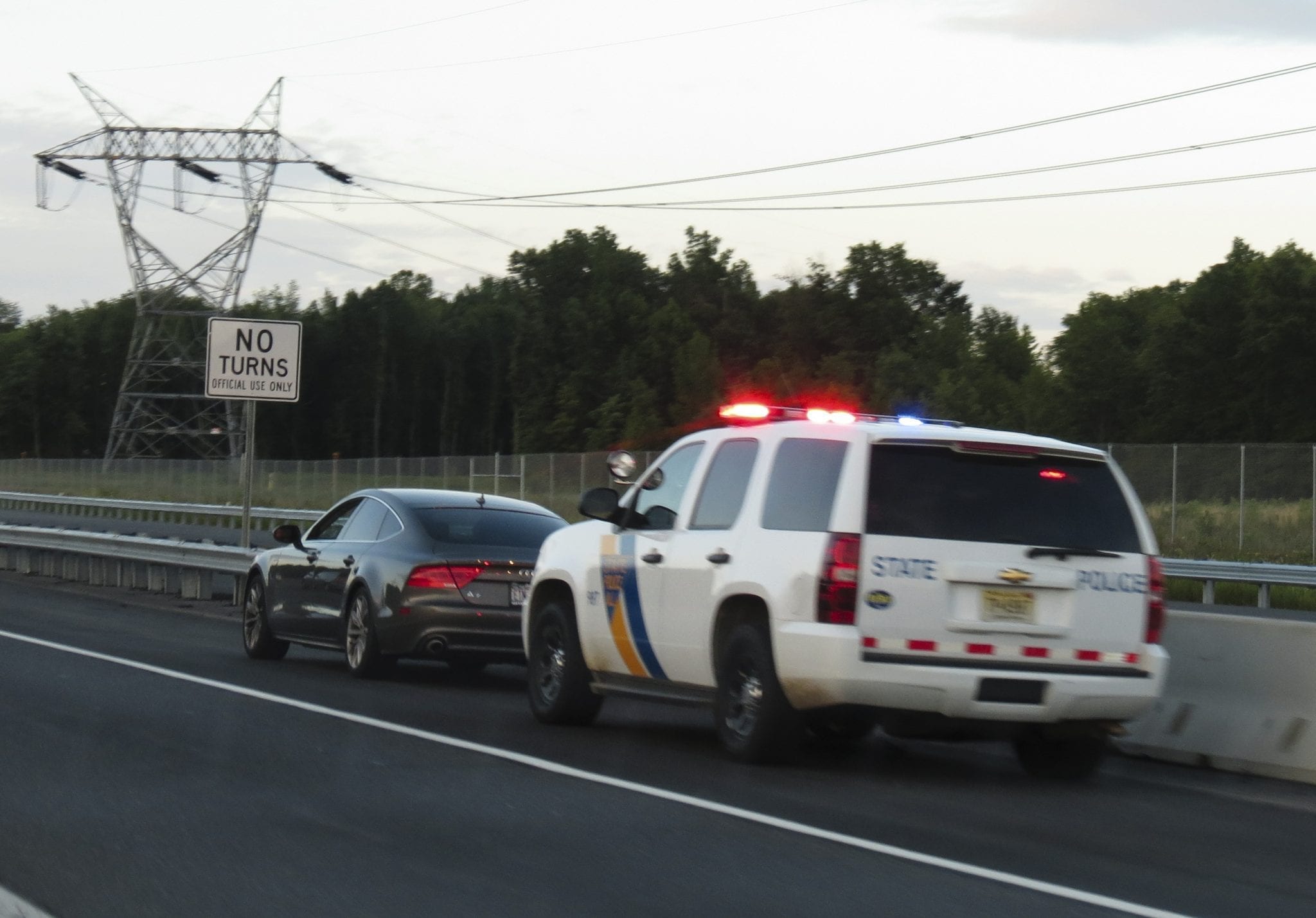
 Roadside intoxication test; image by Jeffrey Smith, via Flickr, CC BY-ND 2.0, no changes.
The DIE test can last 45 minutes and is extremely subjective. Told to walk an imaginary line, the DRE gave one suspect demerits for an “improper number of steps.”
It is scary to be arrested, especially if you’re innocent, even if it’s only overnight. You feel like a character in a Kafka novel, especially if the police won’t believe the blood or urine test results. Sandra Bland committed suicide while in police custody when a traffic stop escalated. The officer wasn’t a DRE, and drugs weren’t suspected, but it’s still an object lesson.
It can be expensive. One of the plaintiffs in the federal lawsuit had legal fees in the thousands of dollars because of her arrest.
One of the Cobb County suspects lost her job because she was arrested on a drug charge, costing her an alcohol server’s license.
Sources:
several states: http://www.chicagotribune.com/suburbs/ct-met-police-drug-driving-test-20171205-story.html
other methods: https://greenhealthdocs.com/driving-under-marijuana-influence/
85 %: https://www.11alive.com/article/news/investigations/the-drug-whisperer-it-happened-to-me/85-500077564
12-step exam: http://www.decp.org/drug-recognition-experts-dre/what-they-do/
Greg Kane, MD: http://decp.us/DrKane.htm
paper: https://www.ncbi.nlm.nih.gov/pmc/articles/PMC3828623/
filed suit: https://reason.com/blog/2017/09/28/bogus-stoned-driving-arrests-highlight-t
shown she was using: http://reason.com/blog/2017/05/12/georgia-pd-our-drug-recognition-experts
any trace: https://one.nhtsa.gov/people/injury/research/stateofknwlegedrugs/stateofknwlegedrugs/pages/3Detection.html
noting: http://www.cbc.ca/news/canada/marijuana-drug-impaired-driving-test-1.4503929
article: https://www.tandfonline.com/doi/abs/10.1080/00085030.2009.10757598
Sandra Bland: https://www.cnn.com/2015/07/23/opinions/cevallos-sandra-bland-traffic-stop/index.html

About Stephen Bitsoli
Stephen Bitsoli writes on drugs, politics, and related matters for several websites. A former newspaper feature writer and a lifelong avid reader, he loves learning and sharing what he’s learned.