
The Evolution of Intermediaries, Pt. 1
The Evolution of Intermediaries, Pt. 1
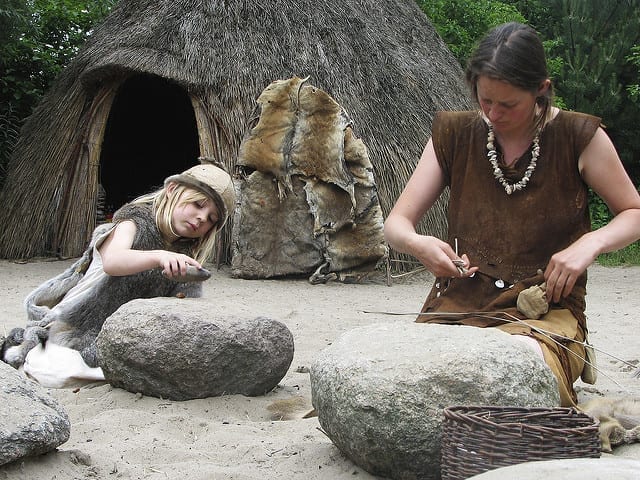
Humans haven't always had such a complex way of living. In simpler times, people interacted more directly with the processes that satisfied their needs and sustained their lives. Over time, however, complexity naturally evolved as a way of solving problems. Intermediaries – middlemen – were added in between people and their goals. Whether or not this is a good thing depends upon who you are, what you need, and how much “help” you can afford.Think of it this way. Everybody needs to eat. People used to take care of their nutritional needs by directly obtaining food from their environment by hunting and gathering. This can take surprisingly little time; several studies indicate that modern hunter gatherers, even in the marginal areas left to them by the dominant culture, only spend an average of around 20 hours per week obtaining food this way, with another 10-20 hours per week performing tasks around the camp, such as cooking or making tools. They do not generally perceive these tasks as drudgery as many modern workers view their jobs. Indeed, many of the rest of us engage in activities like hunting, fishing, gardening, making things, and foraging as hobbies, pleasant tasks to help us relax and enjoy life despite our jobs.However, something happened several thousand years ago that caused the human population to rise. There are several hypotheses about what it could have been, from rising seas causing crowding to the first odd cities, but these speculations are beyond the scope of this post. Around the same time, though, social complexity increased. Intermediaries came between other people and the sources of the things they needed every day. For example, you no longer necessarily hunted or gathered your own food, but instead obtained it from a farmer who grew it for you. Maybe the farmer was a slave or peasant, and the middlemen at the palace or temple redistributed their products to you. At other times, the food may have been a gift, or a commodity obtained through trade. Or perhaps you specialized at growing food, and traded it for what you needed but couldn't make yourself. Either way, the human experience became separated from direct interaction with producing all of our own goods.
 The remains of a Neolithic structure in Catal Hüyük in modern-day Turkey, one of the first places in the world where people lived together in a large group on a relatively permanent basis. Photo by Nicotta, courtesy of Wikimedia Commons. CC BY-SA 3.0
Sources:
Hunter-Gatherers and Play: A Playful Approach to Productive Work
How Farming Almost Destroyed Ancient Human Civilization
The Origin of Money - 4
The Ancient Rise and Recent Fall of Tithing
How the Mafia Works
Book Review: Seeing Like a State
Tudge, Colin. Neanderthals, bandits and farmers: how agriculture really began. New Haven: Yale U Press, 1999. Print.
Greer, John Michael. Dark Age America: climate change, cultural collapse, and the hard future ahead. Gabriola, BC: New Society Publishers, 2016. Print.

About Dawn Allen
Dawn Allen is a freelance writer and editor who is passionate about sustainability, political economy, gardening, traditional craftwork, and simple living. She and her husband are currently renovating a rural homestead in southeastern Michigan.