
Garland Says Jan. 6 Investigation Won't End Until Everyone is Held to Account
Garland Says Jan. 6 Investigation Won't End Until Everyone is Held to Account
On his first anniversary as attorney general, Merrick Garland said he's committed to unraveling the conspiracy behind the storming of the U.S. Capitol, in what he calls "the most urgent investigation in the history of the Justice Department.”Read and listen to the full interview: HEREMembers of the House committee investigating the Jan. 6 riot have asserted former President Trump could be charged with conspiracy and obstruction for his actions. But Democrats in Congress and even some of Garland's friends have worried he'll shy away from the political firestorm that would result from charging a former commander-in-chief with a crime."We are not avoiding cases that are political or cases that are controversial or sensitive," the attorney general said in an exclusive interview with NPR. "What we are avoiding is making decisions on a political basis, on a partisan basis."Recently, prosecutors won their first convictions in federal court in a Jan. 6 case against former Texas oil worker Guy Reffitt. That followed a guilty plea to seditious conspiracy by an Alabama man affiliated with the far-right Oath Keepers militia."We begin with the cases that are right in front of us with the overt actions and then we build from there," Garland said. "And that is a process that we will continue to build until we hold everyone accountable who committed criminal acts with respect to January 6."Garland discussed his wide remit, where the priorities range from price-fixing in the chicken industry to Russian oligarchs financing the war in Ukraine with ill-gotten gains. Here are highlights from the interview: Extraordinary resources devoted to the Jan. 6 probe"Every FBI office, almost every U.S. attorney's office in the country is working on this matter. We've issued thousands of subpoenas, seized and examined thousands of electronic devices, examined terabytes of data, thousands of hours of videos. People are working every day, 24-7, and are fully aware of how important this is. This had to do with the interference with the peaceful transfer of power from one administration to another. And it doesn't get more important than that." The rise in hate crimes against Black, Asian and Jewish people"That's our job, that's in the DNA of the Justice Department. And so protection of civil rights is one of my three main priorities, and I am convinced that the FBI and the other elements of the Justice Department are all in on that project.Every morning, I meet with the FBI to go over threats to the country, including threats, domestic threats and very often hate crimes. I spoke with the rabbi in that [Texas] synagogue just after the event occurred there. You know, this was a case in which we threw the hostage rescue team into the matter from the FBI. So I can assure you that the FBI has made this in its highest priority threat band and every I see, every indication that that is the way they're treating this."Struggling with voting rights after Supreme Court decisions"You are right that the Supreme Court has taken away some of our tools, the most important one being Section 5, which allowed us to pre-clear changes in practices and procedures of voting so we could not have to look at every case one by one to determine whether there was discrimination in those patterns in those practices and procedures.We have Section 2 of the Voting Rights Act, which allows us to go after discrimination, individual cases. But again, you are right, the Supreme Court has narrowly restricted what I think is the correct view of Section 2 and which previously was the Supreme Court's view of Section 2. So we have problems in both of those areas.That has not prevented us from being bringing cases against states that have instituted practices and procedures... And we will continue to do that and we will make those decisions based on our best reading of the law and the facts."The federal death penalty after Boston Marathon bomber decision"I have spoken several times about my concerns about the death penalty, about the arbitrariness of its application, given how seldom it's applied in the federal system and with respect to its disparate impact on people of color. And with respect to exonerations that we've seen, not only in death penalty cases, but in other serious offenses. So I have those concerns, particularly with respect to the moratorium.
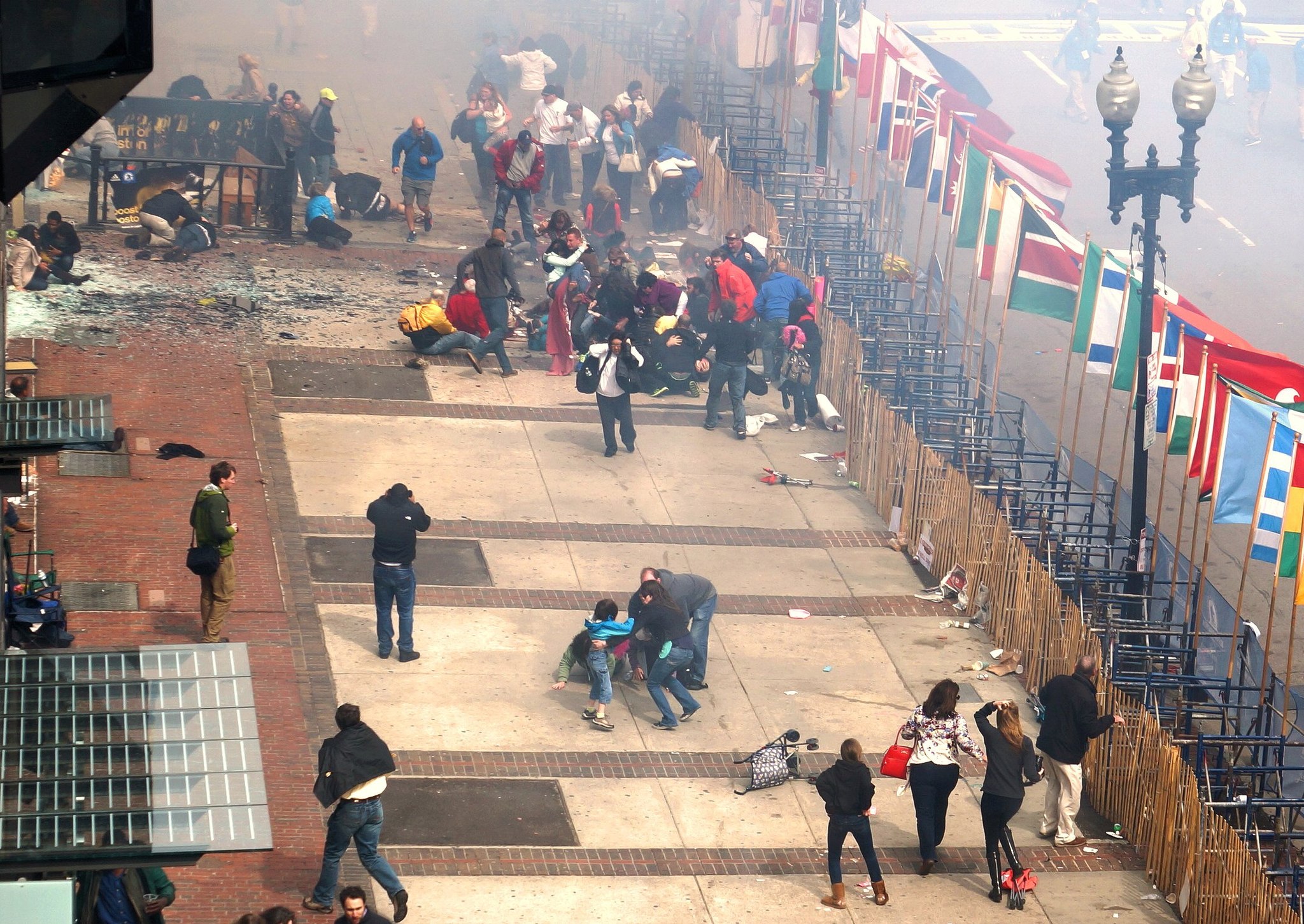 Spectators helping victims soon after the Boston Marathon terrorist attack; image by Aaron Tang, CC BY 2.0, via Wikimedia Commons.
About Carrie Johnson
Carrie Johnson is NPR's National Justice Correspondent. She covers a wide variety of stories about justice issues, law enforcement, and legal affairs for NPR's flagship programs Morning Edition and All Things Considered. Johnson regularly appears on the NPR Politics Podcast.