
Hotter Temps = More Air Pollution from Natural Sources
Hotter Temps = More Air Pollution from Natural Sources
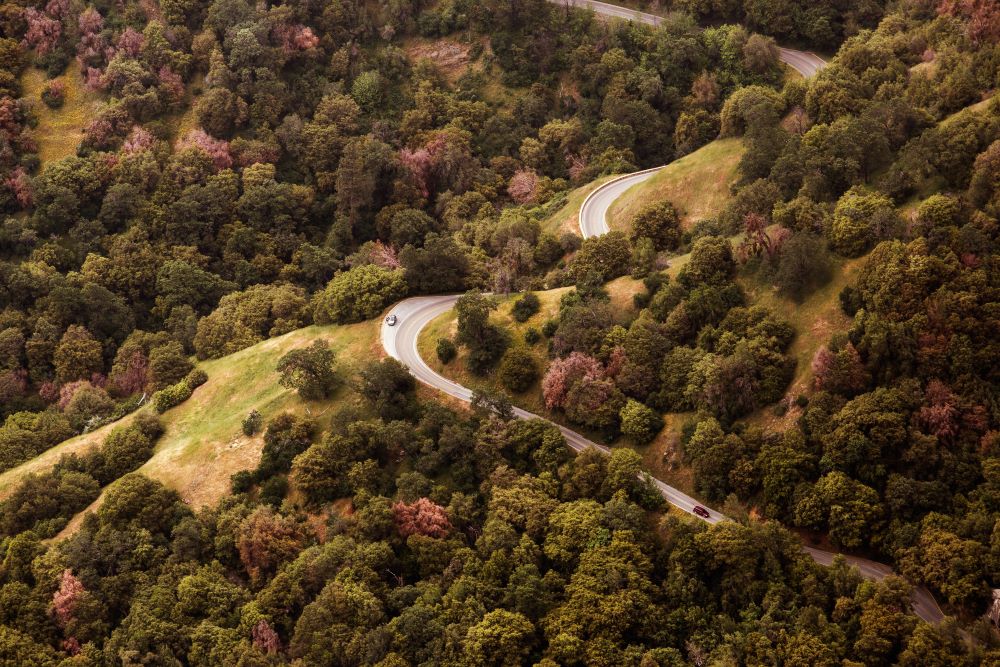
Not all pollution comes from people. When global temperatures increase by 4 degrees Celsius, harmful plant emissions and dust will also increase by as much as 14 percent, according to new UC Riverside research.The research does not account for a simultaneous increase in human-made sources of air pollution, which has already been predicted by other studies.“We are not looking at human emissions of air pollution, because we can change what we emit,” said James Gomez, UCR doctoral student and lead author of the study. “We can switch to electric cars. But that may not change air pollution from plants or dust.”Details of the degradation in future air quality from these natural sources have now been published in the journal Communications Earth & Environment. About two-thirds of the future pollution is predicted to come from plants.All plants produce chemicals called biogenic volatile organic compounds, or BVOCs. “The smell of a just-mowed lawn, or the sweetness of a ripe strawberry, those are BVOCs. Plants are constantly emitting them,” Gomez said.On their own, BVOCs are benign. However, once they react with oxygen, they produce organic aerosols. As they’re inhaled, these aerosols can cause infant mortality and childhood asthma, as well as heart disease and lung cancer in adults.There are two reasons plants increase BVOC production: increases in atmospheric carbon dioxide and increases in temperatures. Both of these factors are projected to continue increasing.To be clear, growing plants is a net positive for the environment. They reduce the amount of carbon dioxide in the atmosphere, which helps control global warming. BVOCs from small gardens will not harm people.“Your lawn, for example, won’t produce enough BVOCs to make you sick,” Gomez explained. “It’s the large-scale increase in carbon dioxide that contributes to the biosphere increasing BVOCs, and then organic aerosols.”The second-largest contributor to future air pollution is likely to be dust from the Saharan desert. “In our models, an increase in winds is projected to loft more dust into the atmosphere,” said Robert Allen, associate professor of Earth and Planetary Sciences at UCR and co-author of the study.As the climate warms, increased Saharan dust is likely to get blown around the globe, with higher levels of dust in Africa, the eastern U.S., and the Caribbean. Dust over Northern Africa, including the Sahel and the Sahara, is likely to increase due to more intense West African monsoons.Both organic aerosols and dust, as well as sea salt, black carbon, and sulfate, fall into a categories of airborne pollutants known as PM2.5, because they have a diameter of 2.5 micrometers or less. The increase in naturally sourced PM2.5 pollution increased, in this study, in direct proportion to CO2 levels.
 Photo by Jahoo Couseau from Pexels
| About UC RiversideThe University of California, Riverside is a doctoral research university, a living laboratory for groundbreaking exploration of issues critical to Inland Southern California, the state and communities around the world. Reflecting California's diverse culture, UCR's enrollment is more than 26,000 students. The campus opened a medical school in 2013 and has reached the heart of the Coachella Valley by way of the UCR Palm Desert Center. The campus has an annual impact of more than $2.7 billion on the U.S. economy. To learn more, visit www.ucr.edu. |

About James Gomez
James is a Bay Area native with a Bachelor's in Applied Physics with a minor in Earth Sciences from the University of California, Santa Cruz. As an undergraduate, he worked with Dr. Emily Brodsky on research concerning granular flow. Now, as a PhD candidate at the University of California, Riverside, James applies his knowledge of particulates to research topics concerning climate change under the guidance of Associate Professor Robert Allen. Currently, James' research interests concern air quality, interaction between wildfire aerosols and clouds, remote sensing, and climate modeling. James' accomplishments at UCR include a first authored paper, a National Science Foundation Graduate Research Fellowship Program Honorable Mention, attainment of the Geographer's Scholarship, an award for Outstanding Student Presentation at the 2023 American Meteorological Society, and being lead instructor for the GEO011 course in Summer 2022.