
How Biofouling Impacts Vessel Efficiency — And How to Fix It

How Biofouling Impacts Vessel Efficiency — And How to Fix It
The maritime shipping industry has set ambitious decarbonization targets over the next decade. Shrinking the shipping industry’s carbon footprint is going to take a range of innovative solutions and technologies — from simple solutions like more efficient route planning to more advanced options, such as hull design.Biofouling presents a major threat to the industry’s progress toward decarbonization targets. Biofouling is the accumulation of microorganisms, plants, algae, or small animals on wet surfaces that have a mechanical function, causing structural or other functional deficiencies. Maritime shipping and logistics companies face challenges in vessel marine performance related to macrofouling — the attachment of larger organisms such as barnacles, soft corals, and seaweed.[Read more: What is Biofouling and How Can We Stop It?] Here’s how biofouling is affecting the shipping industry and what marine logistics companies can do to prevent and combat biofouling.How biofouling impacts vessel efficiencyBiofouling happens in two stages: microfouling and macrofouling. In macrofouling, heavier organisms such as barnacles and small coral colonies adhere to the submerged hull of a ship. These organisms can weigh up to 10 tons, significantly increasing the vessel’s drag.“The costs of these hull-fouling stowaways are substantial: According to one study, the U.S. shipping industry spends more than $36 billion each year in added fuel costs to overcome the drag induced by clinging marine life or for anti-fouling paint that prevents that life from hitching a ride in the first place,” reported Science Magazine. “And that figure doesn’t include the cost to regularly scrape a hull smooth, which costs approximately $4.50 for every square foot of hull surface.”Even minor microfouling can decrease vessel efficiency by 10 - 16%; macrofouling and result in loss of 86% of a vessel’s cruising speed, contributing to delays across the marine shipping industry.
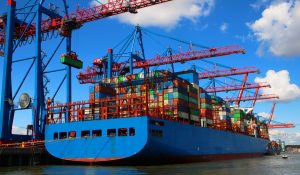 Photo by Elchinator, courtesy of pixabay.com.
Using an electrolytic system: This system passes a current between two anodes usually made of copper and aluminum. The current produces copper ions that prevent marine organisms from settling on the hull, as well as prevents the surface from corroding, as rough surfaces are more susceptible to biofouling.
Chemical dosing: This measure is used specifically for a ship’s piping method. It involves using an antifouling chemical such as ferrous chloride to coat the pipework with a protective layer that prevents corrosion.
Using an ultrasonic system: One of the most effective antifouling measures, this method uses high-frequency electrical impulses to prevent marine growth from attaching to piping systems.
Electro-chlorination: A mechanism on the ship uses chlorine to produce sodium hypochlorite, which is then used to prevent fouling. This method is slightly more risky than others and must be tested as chlorine can damage marine ecosystems.

About Emily Heaslip
Emily wrote this piece for Sofar Ocean, a company whose goal is to create a data-abundant ocean and provide critical insights to science, society, and industries. As a first step, we deploy and grow the world’s largest real-time ocean weather sensor network which provides the most accurate marine weather information and forecasts to power industry-specific solutions. Sofar believes that more and better ocean data will contribute to greater understanding of our environment, better decisions, improved business outcomes, and ultimately contribute to a more sustainable planet.