
Know Your Employee Rights on Wage Payment and Collection Law

Know Your Employee Rights on Wage Payment and Collection Law
If your employer is not paying your wage or overtime, find out about your employee rights and the types of compensation you may win when you take a legal route. Learn about the legal options if you have not got your wages for a long time. Your employer must pay you at a regular time for all the non-overtime works you did. And have you been working overtime as work demanded, you are eligible for payment at the overtime rates. Suppose you owe any regular or overtime pay from your employer. In that case, the law gives you scope to recover the unpaid wages and entitles you to compensation and, in certain situations, some penalties that an employer must have to pay you. This article explores your workplace rights regarding wages and delays in payment and your legal options under the wage payment and collection law.Minimum wageEvery employer must pay at least the minimum wages to all the employees. They must get the federal minimum wage or the local or the state minimum wage if any of the latter is more than the federal minimum wage. If both parties agreed on a higher rate than the federal minimum wage, the employer has to pay that.
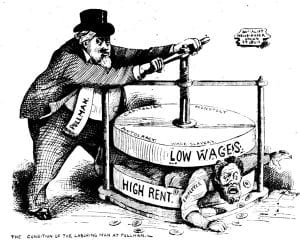 Low wages and high rents have been crushing workers for a long time, as this 1894 political cartoon demonstrates. Public domain image by the Chicago Labor Newspaper, courtesy of Wikimedia Commons.
About Addie Davison
Addie Davison is a legal advisor and a writer from New York & New Jersey, U.S. She holds a bachelor’s degree in English literature. She likes to write about personal injury, accidents, etc. She is very passionate about writing. Her articles mainly focus on content quality and originality. She has self-promotion abilities and works independently on her own initiatives. You can reach her at addiedavison009@gmail.com.