
Categories | Health & Medicine Article

Maternal Complications are more Prevalent in African American Women
December 14th, 2017 Health & Medicine 4 minute read
Article Image

Maternal Complications are more Prevalent in African American Women

It’s estimated that up to 900 women die each year during pregnancy and childbirth, while dozens more suffer life-threatening maternal complications.  African American women are almost four times as likely to endure complications than Caucasian mothers.  Let’s take a look at some of the issues they may experience.Postpartum hemorrhage is one such maternal risk.  This is when a woman experiences heavy blood loss after delivering her child.  The most common cause is uterine atony, meaning the uterus doesn’t contract sufficiently after delivery.  Fibroids or a systemic blood clotting disorder, such as hemophilia, can also lead to hemorrhaging.Heather Dobbs nearly died from a postpartum hemorrhage this year while delivering her daughter Claire.  Dobbs was 37 when she delivered her first child, a son she named Cameron, and was 41 weeks pregnant when she went into a prolonged labor.  She eventually delivered Cameron via a C-section and was cleared to go home.  Dobbs knew she wanted to schedule the same procedure to deliver Claire, and she picked February 8th to bring her into the world.

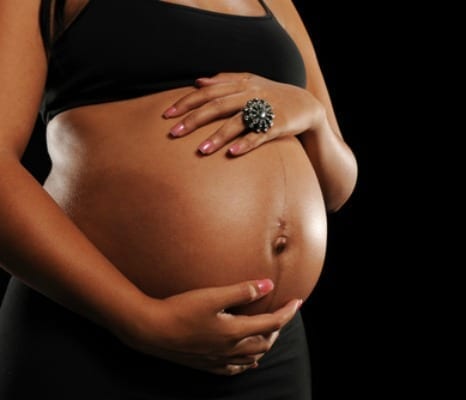
Image Courtesy of London Scout

This time, however, doctors warned Dobbs that her uterus was soft, enlarged and floppy.  In other words, she had uterine atony, and her uterus would not contract as it was supposed to.  She also couldn’t stop bleeding.  The last thing Dobbs remembers is thinking to herself that she can’t die before getting to hold her daughter.  While Claire was delivered safely, doctors were forced to perform a full hysterectomy and Dobbs would suffer the lasting effects of postpartum depression.Other maternal complications include fibroids and preeclampsia.  Fibroids, or benign tumors in the uterus, are most common in women 30- to 40-years old.  They are three times more common in black women than in white women.  Fibroids can cause heavy menstrual bleeding and pelvic pain.  Preeclampsia occurs when a mother-to-be with normal blood pressure develops high blood pressure during pregnancy and protein is found in the urine.  It can lead to serious issues for both the mother and unborn child if not treated.  Preeclampsia presents earlier in black women than in any other race.Uterine rupture, spontaneous coronary artery dissection (SCAD), or peripartum cardiomyopathy can also occur.  A rupture is a tear on the wall of a women’s uterus.  When the uterus tears, the unborn baby can migrate from the uterus to the mother’s abdomen, depriving it of oxygen, while the mother experiences severe blood loss.SCAD usually presents late in pregnancy or postpartum.  A tear forms in one of the blood vessels in the heart, slowing or blocking blood flow and causing an irregular heartbeat or even a heart attack.  This can occur despite the mother having otherwise perfect health without any serious issues.Peripartum cardiomyopathy (PPCM) is a also form of heart failure in pregnant women.  This occurs when the heart isn’t strong enough to pump blood to the women’s vital organs.  A mother may experience PPCM up to six months after delivery.  It affects African American women at a younger age than Caucasian mothers, and the recovery time for black women is at least twice as long.Studies have found that African American women also had more severe hypertension, lower hemoglobin concentrations preceding hemorrhage, more antepartum hospital admissions, and a higher rate of obesity during pregnancy.  Despite the possibility of all of these complications, women are rather told about the risks that come along with pregnancy and motherhood.  While the topic may be tough to swallow, knowledge is power, and discussing these issues could help to prevent them.

Sources:

Why African-American Women Are at Greater Risk for Pregnancy-Related DeathBlack Women Disproportionately Suffer Complications of Pregnancy and Childbirth. Let’s Talk About It.

Sara E. Teller

About Sara E. Teller

Sara is a credited freelance writer, editor, contributor, and essayist, as well as a novelist and poet with nearly twenty years of experience. A seasoned publishing professional, she's worked for newspapers, magazines and book publishers in content digitization, editorial, acquisitions and intellectual property. Sara has been an invited speaker at a Careers in Publishing & Authorship event at Michigan State University and a Reading and Writing Instructor at Sylvan Learning Center. She has an MBA degree with a concentration in Marketing and an MA in Clinical Mental Health Counseling, graduating with a 4.2/4.0 GPA. She is also a member of Chi Sigma Iota and a 2020 recipient of the Donald D. Davis scholarship recognizing social responsibility. Sara is certified in children's book writing, HTML coding and social media marketing. Her fifth book, PTSD: Healing from the Inside Out, was released in September 2019 and is available on Amazon. You can find her others books there, too, including Narcissistic Abuse: A Survival Guide, released in December 2017.

Related Articles