
Officers May be Misusing Tasers in Jails, According to Investigation
Officers May be Misusing Tasers in Jails, According to Investigation
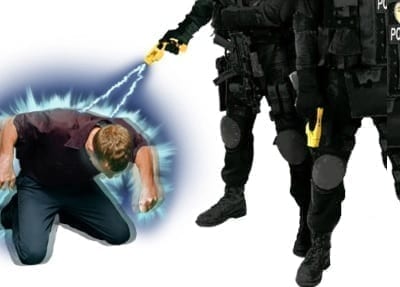
Tasers currently are not used in federal prisons, but officers carry them in 27 state-operated facilities. These Tasers are meant only for law enforcement who have high-risk roles. Tasers are most common in local and county jail systems. An investigation that took a look at the number of deaths in U.S. jails caused by Taser use found this ‘weapon’ was the cause of more than a quarter of 84 inmate deaths.The deaths of 104 inmates who died as a result of being stunned were evaluated in total and an autopsy report was requested for 84. From this number, only two inmates were considered armed and dangerous when the stun gun was used, while 18 were assaulting guards or fellow inmates.In 34 of these cases, the inmates were restrained by the use of handcuffs or other means when the Tasers were deployed, suggesting they could not possibly have been considered dangerous and weren’t able to even defend themselves. In 49 of 70 cases, the inmate was pinned to the ground or otherwise held.
 Image Courtesy of KRQE.com
Sources:
Inmate deaths reveal “torturous” use of TasersTaser use contributed to more than 20 inmate fatalities in US jails; UN official calls for probe
About Sara E. Teller
Sara is a credited freelance writer, editor, contributor, and essayist, as well as a novelist and poet with nearly twenty years of experience. A seasoned publishing professional, she's worked for newspapers, magazines and book publishers in content digitization, editorial, acquisitions and intellectual property. Sara has been an invited speaker at a Careers in Publishing & Authorship event at Michigan State University and a Reading and Writing Instructor at Sylvan Learning Center. She has an MBA degree with a concentration in Marketing and an MA in Clinical Mental Health Counseling, graduating with a 4.2/4.0 GPA. She is also a member of Chi Sigma Iota and a 2020 recipient of the Donald D. Davis scholarship recognizing social responsibility. Sara is certified in children's book writing, HTML coding and social media marketing. Her fifth book, PTSD: Healing from the Inside Out, was released in September 2019 and is available on Amazon. You can find her others books there, too, including Narcissistic Abuse: A Survival Guide, released in December 2017.