
Right to Privacy - VPNs and the Law

Right to Privacy - VPNs and the Law
Privacy is a fundamental human right. Using a virtual private network (VPN) is becoming increasingly essential in preserving that right for millions of Internet users. Basically, VPN is software that will create a secure, encrypted “tunnel” to a remote server through which you connect to the Internet. When you connect to a VPN, you can effectively conceal all of your online activity and communications from your ISP, from hackers, and even from government surveillance efforts. Furthermore, by connecting to the Internet through a remote server in a separate location, VPN can be used as an incredibly powerful tool to evade government firewalls as well as to elude any government-mandated Internet censorship tactics. People use VPNs every day to help protect their online privacy by encrypting their Internet activity and to preserve their freedom of speech and expression by circumventing firewalls and government censorship.Because you can use a VPN to hide your online activity, evade government firewalls, and access geographically restricted content, a common question that many people have regarding VPNs is whether using this type of software is illegal. The answer is not always 100% cut and dry, however. In the United States and indeed throughout the vast majority of the world, using a VPN is perfectly legal. On the other hand, in countries that employ strict internet censorship laws and/or conduct full-scale government surveillance, the legality of using a VPN often gets into a bit of a murky area. Case in point, one of the most notorious countries in terms of Internet censorship and government surveillance is China. If you have visited China and have attempted to use the Internet there, you are no doubt familiar with the so-called “Great Firewall” that blocks access to many of the most popular websites, apps, and services for anyone accessing the Internet from within the country. On top of that, whatever you do online in China is subject to scrutiny and surveillance by the government. Needless to say, Chinese authorities are not too keen on people using VPNs to thwart these types of control tactics. However, the predicament is that it is also not in the country’s interest to ban the use of VPNs as their use is critical for the viability of large international businesses operating in the country. The result is an ever-shifting and unpredictable position on how VPNs should be regulated in China.For now, using a VPN is considered legal in China, as long as the VPN software being used is authorized by the government. Chinese authorities often threaten to prosecute any unauthorized VPN use in the country, but the reality is that, to date, only a few cases have been reported where locals have been punished for using a VPN. So far, there haven’t been any reports of foreigners being subject to any such punishments. That being said, even though VPNs are not technically illegal in China, the Great Firewall does try to make it difficult for VPNs to work effectively. Nonetheless, there are several VPN providers that are able to get past the firewall and work well in China.
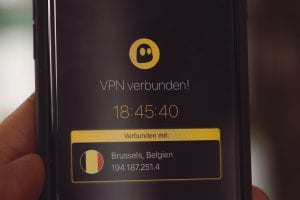 Smartphone with “VPN verbunden” (“VPN connected”) on screen; image by Markus Spiske, via Unsplash.com.

About Attila Tomaschek
Attila Tomaschek is a digital privacy expert at ProPrivacy. As an industry veteran, Attila has cultivated a deep understanding of how VPNs can help users unlock the Internet and protect their privacy online. Attila is a staunch advocate for digital privacy and for a free and open Internet. Follow Attila on Twitter.