
Safety First: Everything You Need to Know About Child Seat Safety
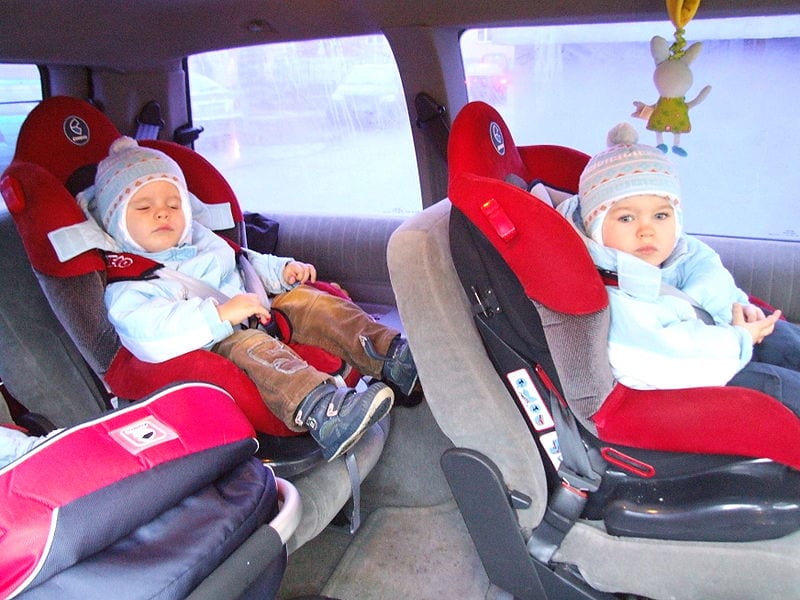
Safety First: Everything You Need to Know About Child Seat Safety
Did you know that child car seats, when used properly, have proven to reduce fatal injuries by 71% in infants and 54% in toddlers?Child seat safety involves more than simply following the law. Continue reading to learn about the rules, seat types, and the best practices to ensure your child’s safety on the road.California Child Safety Seat Laws According to current laws in California, any child under the age of 2 must be secured in a rear-facing car seat in a motor vehicle unless they are 40” or taller or weigh 40 pounds or more. In addition, the specifications of the seat by the manufacturer should also be followed.Children 7 years old or younger must be secured in a booster or car seat and placed in the back seat of the vehicle. A booster seat is no longer needed at age 8 (or when the child is 4’9″ or taller). However, they must still abide by safety seat belt laws.Registering Your Child’s Car Seat It isn’t enough to buy a car seat and ensure it is set up safely. You should also register your child’s car seat with the manufacturer. When you register your product, you will receive notifications if there are any recalls.Car seat recalls are, fortunately, rare, but registration is one of the best ways to protect your child from unknown dangers. Most manufacturers have phone numbers for registration in their information and installation booklets or places on their websites.Recalls from major, well-known brands have been issued within the last few years. This was due to various issues that could cause the safety seat to fail in the event of a crash. You can look up the product number and possible recall history to confirm if your child safety seat has been found to be defective. If the seat was registered, you should receive a notice about any product issues.Types of Car Seats There are multiple car seats explicitly designed for children of all age ranges, sizes, and weights. These are the safety seat types from infancy through childhood.Rear-facing Car Seats Rear-facing car seats are designed for infants until between the ages of 2-4 or when the child weighs between 22-35 pounds, depending on the specific model. These seats typically have a base that remains installed and handles to be used as a carrier.The seat faces the rear of the car, so in the event of a crash, it will offer the best support for infants and toddlers and absorb most of the impact. The most common injuries in adults after car accidents are to the neck and head.Therefore, rear-facing safety seats protect against these injuries as the whole body is protected by the shell of the seat, and it moves all at once in response to collision or impact. This is crucial as babies do not have the muscle tone to hold their heads up for support.Rear-facing car seats should never be placed in the front seat of a car with an active front airbag. If the airbag were deployed, its force hitting the car seat could cause injury or even death.Front-facing Car Seats Children should be kept in rear-facing car seats for as long as possible as they are the safest type. While it depends on the height, weight, and local laws, children are typically switched to a front-facing car seat by the age of four at the latest. California follows the 4-40-40 rule to judge whether your child is able to graduate to a front-facing seat. The rule stands for:
4+ years old
40+inches
40+ pounds
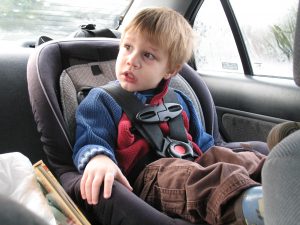 Young boy in a car seat; image by xordroyd, via Flickr, CC BY-SA 2.0, no changes.

About Daniel Kim
This article is written by Daniel Kim, a personal injury lawyer in California.