
Seat Belts Used to Be Lame - How Safety Laws Took Over Our Roads

Seat Belts Used to Be Lame - How Safety Laws Took Over Our Roads
No one is too cool for safety, right? Not necessarily. Though pretty much everyone accepts that using a seat belt is safer than not, that wasn’t the case when seat belts first came around. Some people have a hard time with change.Nothing represents people’s resistance to change better than the introduction of the seat belt. Though these safety devices have been around nearly for as long as cars themselves, using them wasn’t of much concern until several decades ago. When the government tried to make drivers wear seat belts, the public nearly revolted – some people even cut the seat belts out of their cars in protest. That a common sense safety measure that saved members of the public from having to seek out a Fayetteville car accident lawyer was so fiercely rejected should come as no surprise to anyone who lived through COVID-19.Over time, the anger died down, especially when it became clear that wearing a seat belt can protect you from sustaining life-altering injuries in auto accidents. And thus, wearing a seat belt, which used to as uncool as it gets, became a widely accepted rule of the road.How Did Using a Seat Belt Become a Rule of the Road?Here in the U.S., people tend to like their freedoms, and the issue of government involvement in our day-to-day lives has been a hot topic of discussion since the beginning of time. So, when the government started to push seat belts for the public’s overall safety, the public, unsurprisingly, had a lot to say about it.The National Highway Traffic Safety Administration (NHTSA) came out with a bang when making a stance on seat belts. In 1973, the agency decided that all newly manufactured cars in the United States would have a seat belt interlock system, preventing drivers from operating them when not buckled. As expected, the response from the general public was not favorable, and Congress quickly killed the NHTSA’s safety initiative.That wasn’t the end of the matter, though. New York was the first state to enforce a seat belt law, doing so in 1984. In the coming years, nearly every state followed, and, in 2024, New Hampshire is the only state that does not currently have a seat belt law for adults. Despite being opposed to wearing seat belts at first (some drivers even wore shirts with seat belts printed on them while driving to avoid buckling up), today, the overwhelming agreement is that wearing a seat belt is, in fact, safer than not doing so.If Seat Belts Were Lame, Why Did We Start Wearing Them?Though lots of people weren’t fans of seat belt laws when they were first introduced, it’s not because the consequences were so severe. Even today, the worst thing you might get for not wearing a seat belt (aside from perishing in a tragic accident) is a small fine, at most. So, why did people start wearing seat belts anyway?
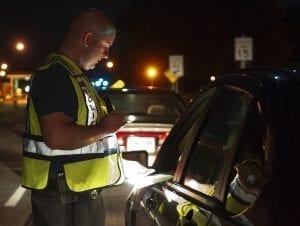 A seatbelt enforcement stop near F.E. Warren Air Force Base, Wyoming. U.S. Air Force photo by R.J. Oriez, courtesy of warren.af.mil.
About Kenneth J. Kieklak, Attorney At Law
Over the course of more than two decades, Ken’s personal attention to his clients and his extensive experience have yielded proven results. His understanding of complex legal issues doesn’t keep him from sitting down with clients and listening to their thoughts and concerns. Ken works with you, the client, in partnership to determine and achieve the best possible outcome.Ken graduated from North Little Rock Northeast High School in 1985. He attended Rhodes College in Memphis, Tennessee and was a four-year letterman on the Rhodes College football team, earning CAC All-Conference honors his senior year on the only Rhodes College football team to be selected to the NCAA Division III playoffs. Ken graduated with a bachelors degree in history from Rhodes College in 1989. He attended the University of Arkansas School of Law and graduated in 1993 with a juris doctorate degree.