
The Social Cost of Freedom (Free, Pt. 1)
The Social Cost of Freedom (Free, Pt. 1)
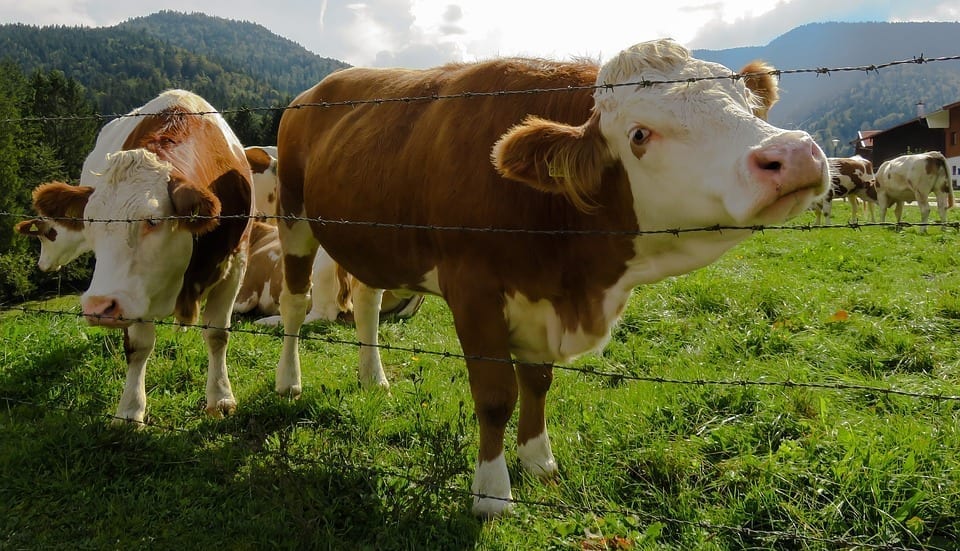
Back in the 1950s, economist Ronald Coase was thinking about the problem of the social cost of freedom.Coase won a Nobel in Economics in part for his 1960 work “The Problem of Social Cost.” In this highly-cited paper, Coase used a thought experiment to illustrate that the social cost of freedom is symmetrical. Imagine two neighbors, a farmer and a rancher. Without a fence to separate them, the rancher's cattle would trample and eat the farmer's crops. No matter how this dispute is settled, someone's going to have to pay for the fence. If the rancher is held responsible, building a fence to keep his cattle out of the field means that he's paying to keep the farmer prosperous. Or, if the law holds that the farmer is responsible for keeping the cows out of his field, the cost of building a fence is all on him. Either way, the cost of freedom falls more on one party than the other, reducing that person's freedom.Sometimes, this literally happens, and the question is how to handle that cost. The State of Indiana has a law (Indiana Code 32-26-9) regarding splitting the cost of border fences between property owners who benefit from the presence of the fence. In 2016, Belork v. Latimer worked its way through the Indiana Court of Appeals. John Belork rebuilt lengths of a fence in order to keep his cattle on his property. Pursuant to Indiana law, Belork then tried to get his neighbor to rebuild the remaining portions of the fence. However, his farming neighbor, DMK&H, refused to do so, claiming that they did not benefit from the fence in question and didn't use the fence at all, despite a history of Belork's cattle escaping onto their property without it. Originally, the court decided that DMK&H didn't use the fence, but the appeals court decided to grant Belork a rehearing.
 Ronald Coase profile photo in 2003. Photo taken at and by the Coase-Sandor Institute for Law and Economics, University of Chicago Law School. Courtesy of Wikimedia Commons.
Sources:
What a Nobel Prize-Winning Economist Can Teach Us About Obamacare
Appeals court reverses its decision on partition fences
Indiana Code Title 32. Property § 32-26-9-3
Belork v. Latimer (PDF)
Emergency Medical Treatment and Active Labor Act (EMTALA)
Original 1989 document where Heritage Foundation created Obamacare’s individual mandate
Americans Are Putting Off Medical Treatments Because They Can't Pay

About Dawn Allen
Dawn Allen is a freelance writer and editor who is passionate about sustainability, political economy, gardening, traditional craftwork, and simple living. She and her husband are currently renovating a rural homestead in southeastern Michigan.