
Supreme Court Rules Against Organized Labor in the Public Sector
Supreme Court Rules Against Organized Labor in the Public Sector
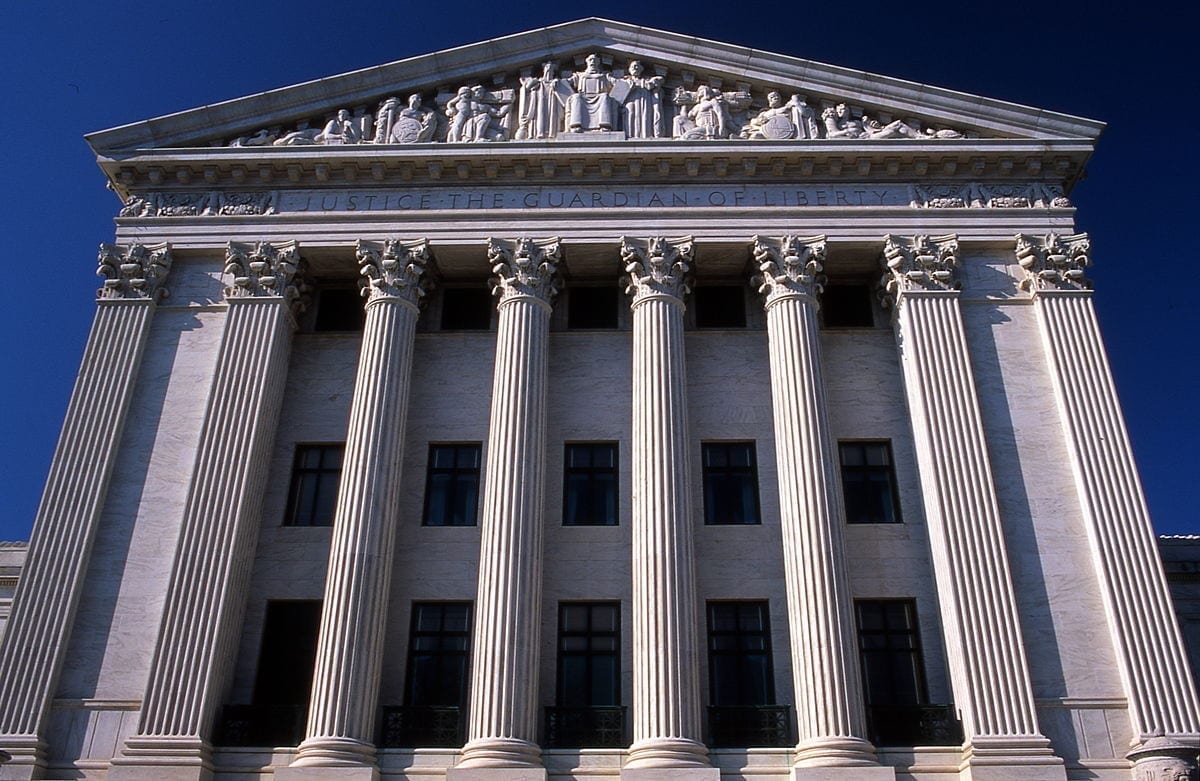
The Supreme Court dealt a sharp blow to organized labor on Wednesday. In a 5-4 vote, the justices ruled that government workers who turn down union membership can’t have their pay docked to fund collective bargaining.Writing for the conservative-led majority, Justice Samuel Alito Jr. opined that wage deductions pose a constitutional violation.“We conclude that this arrangement violates the free speech rights of nonmembers by compelling them to subsidize private speech on matters of substantial public concerns,” wrote Alito.The ruling, writes The New York Times, could see public-sector unions across the country lose influence and tens of millions of dollars in funds. Alito suggested that organized labor look to its past to offset the loss.“We recognize that the loss of payments from nonmembers may cause unions to experience unpleasant transition costs in the short term, and may require unions to make adjustments in order to attract and retain members,” wrote Justice Alito. “But we must weigh these disadvantages against the considerable windfall that unions have received.”The Times reports that Alito was joined in the majority by Chief Justice John G. Roberts Jr. and Justices Anthony M. Kennedy, Clarence Thomas and Neil M. Gorsuch. Together, the justices overruled nearly a half-century of precedent allowing organized labor to draw funds from non-members in the public sector.Justice Elena Kagan issued a strong dissenting, writing, “There is no sugarcoating today’s opinion. The majority overthrows a decision entrenched in this nation’s law—and in its economic life—for over 40 years.”“As a result,” she continued, “it prevents the American people, acting through their state and local officials, from making important choices about workplace governance. And it does so by weaponizing the First Amendment, in a way that unleashes judges, now and in the future, to intervene in economic and regulatory policy.”The court’s First Amendment argument contended that requiring payments to support collective labor’s bargaining could force employees to financially support politics they may personally disagree with.President Trump—whose election was once called “an extinction-level event for American labor” by one union staffer—praised the court’s decision on Wednesday.https://twitter.com/realDonaldTrump/status/1011975204778729474The decision, speculates the Times, isn’t likely to affect unions in the private sector. The First Amendment and the Constitution, taken together, restrict government action rather than private conduct. And, as the Times notes, scarcely 6.5% of private employees belong to labor unions.Along with a series of pivotal recent rulings, the Supreme Court made another important announcement Wednesday: Justice Anthony M. Kennedy is set to retire by the end of July, providing President Trump with an opportunity to pick a replacement.CNBC speculates that Kennedy’s absence could have a tremendous impact on upcoming midterm elections. Any presidential appointment to the Supreme Court has to be confirmed by the Senate—a nicety used by Republicans to derail former President Obama’s nomination in favor of Gorsuch.
Sources
Anthony Kennedy retiring from Supreme CourtDonald Trump can kill the American unionSupreme Court Ruling Delivers a Sharp Blow to Labor UnionsTrump administration opposes unions in key Supreme Court case
About Ryan J. Farrick
Ryan Farrick is a freelance writer and small business advertising consultant based out of mid-Michigan. Passionate about international politics and world affairs, he’s an avid traveler with a keen interest in the connections between South Asia and the United States. Ryan studied neuroscience and has spent the last several years working as an operations manager in transportation logistics.