
Supreme Court Will Not Review Texas-led Lawsuit to Revive Trump's "Public Charge" Rule
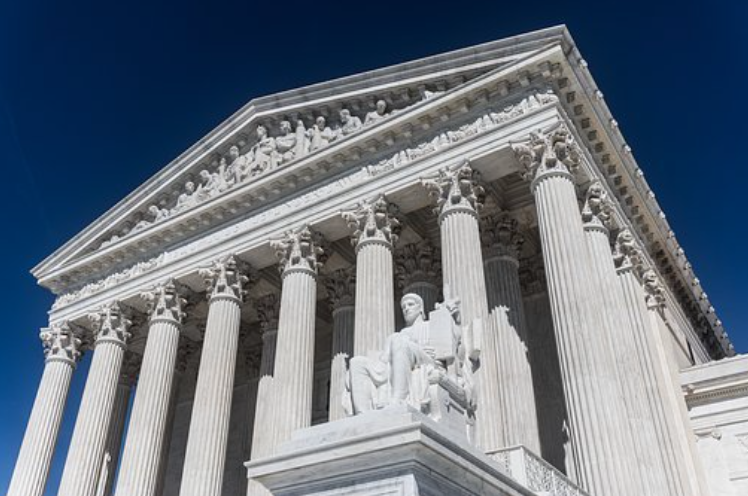
Supreme Court Will Not Review Texas-led Lawsuit to Revive Trump's "Public Charge" Rule
The United States Supreme Court declined to review a lawsuit filed by Texas and 13 other states, which had sought to revive the Trump administration’s “public charge” rule.The issue, notes The Texas Tribune, centers on the Trump administration’s decision to broaden the definition of the term “public charge” to include noncitizens who rely on or receive public benefits, such as Medicaid, food stamps, and housing benefits.The public charge provision, notes CNN, dates back to the Immigration Act of 1882. Federal lawmakers at the time wanted to ensure that immigrants to the United States would be able to take care of themselves and not act as a net drain on the government.While the rule has existed for over a century, the Trump administration interpreted it in a more stringent fashion. The former director of U.S. Citizenship and Immigration Services, Kevin Cuccinelli, attracted some controversy by revising the iconic poem upon the Statue of Liberty, saying, “Give me your tired and your poor who can stand on their own two feet and who will not become a public charge.”Under the Trump administration’s “public charge” rule, documented, legal immigrants would have been unable to attain permanent residency or citizenship if they had availed—or were likely to avail—varied types of government assistance.However, the public charge rule was quickly challenged in courts and later found invalid.
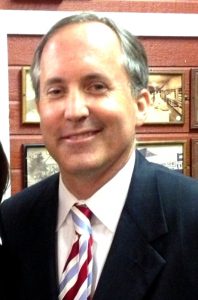 A 2013 image of Texas Attorney General Ken Paxton. Image via Wikimedia Commons/user:Alice Linahan Voices Empower. (CCA-BY-2.0).
Sources
Supreme Court won't let Texas immediately defend Trump-era 'public charge' immigration ruleU.S. Supreme Court rejects Texas-led lawsuit seeking to protect a Trump immigration policy
About Ryan J. Farrick
Ryan Farrick is a freelance writer and small business advertising consultant based out of mid-Michigan. Passionate about international politics and world affairs, he’s an avid traveler with a keen interest in the connections between South Asia and the United States. Ryan studied neuroscience and has spent the last several years working as an operations manager in transportation logistics.