
Fungibility Key in Trinity Lutheran Case
Fungibility Key in Trinity Lutheran Case
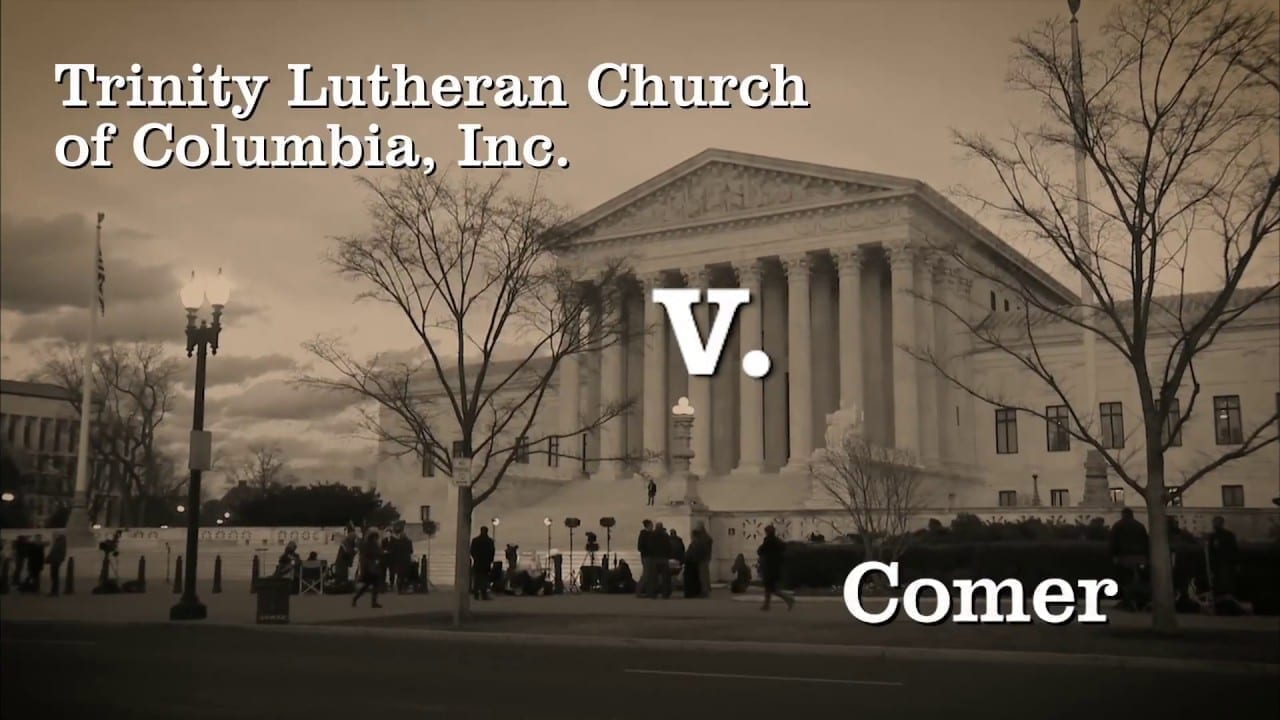
There's an upcoming case at the Supreme Court that has some rather far-reaching implications. Trinity Lutheran v. Comer concerns a Missouri recycling program, a religious school, and a whole passel of issues.The Supreme Court, back up to full staffing levels, finally agreed to hear the case of Trinity Lutheran Church in Columbia, Missouri, which operates a daycare and preschool program as part of its religious mission. The church applied for a grant from the Missouri Department of Natural Resources to resurface its playground with rubber from recycled tires. This surface is softer and more squishy than conventional concrete surfaces and can be safer for children to run and play – and fall – upon. The State, which funds the resurfacing for nonprofits from a tax imposed on the sale of new tires, approved the project, ranking it fifth out of 44 applications submitted in 2012, high enough to be awarded a grant.Only one problem: Trinity Lutheran is a religious organization. Section 7 of the Missouri state Constitution mandates that “no money shall ever be taken from the public treasury, directly or indirectly, in aid of any church, sect or denomination of religion.” Since public funds pay for the recycling program's resurfacing projects, the Trinity Lutheran request was scrapped.The church sued, but lost. However, advocates say that spending money to revamp a religious school's playground is utterly secular. It's not like the money is going into church coffers, or even to an academic program that emphasizes a faith-based worldview. It's this last bit that is of extreme interest to religious freedom advocates and civil libertarians alike, and would have important implications for school choice and the free exercise of religion as required by the First Amendment.This is where framing the issue matters mightily. Does providing public funds to Trinity Lutheran constitute a violation of the Establishment clause by benefiting their sect above others? Or, as attorneys for the church posit, does denying the religious school a grant that a secular, nonprofit school would have won mean that the government is making it harder for members of the church to express their religious beliefs, a clear First Amendment breach? If Trinity Lutheran claims that the rubbery playground surface is clearly a secular expenditure but that failing to provide a rubbery surface prevents freedom of worship, they have some 'splainin' to do.
 A work crew spreading rubber mulch on a playground. Recycled rubber mulch made from old tires makes for a safer playground surface. Photo by VSPYCC, via Flickr. CC BY 2.0
Sources:
Playground Case Could Breach Barrier Between Tax Coffers, Religious Schools
Trinity Lutheran v. Comer: 7 Things to Know About a SCOTUS Preschool Case With Big School Choice Implications
SCOTUS playground case can end anti-religion, anti-Catholic law
Planned Parenthood: Money Isn’t Fungible, Just Truth
“Fungibility”: The Argument at the Center of a 40-Year Campaign to Undermine Reproductive Health and Rights
State of Missouri Constitution (PDF)

About Dawn Allen
Dawn Allen is a freelance writer and editor who is passionate about sustainability, political economy, gardening, traditional craftwork, and simple living. She and her husband are currently renovating a rural homestead in southeastern Michigan.