
Wetlands Decision Muddies the Water at EPA
Wetlands Decision Muddies the Water at EPA
Does the Earth belong to us, or do we belong to the Earth? The answer, which was clear enough in 1970, seems to have been forgotten by the time five members of the Supreme Court issued their ruling in Sackett v. EPA. In this wetlands decision, the court's conservative majority reached a conclusion so counter to the text of the law that it compelled Justice Kavanaugh to side with the liberals.The origin of the Clean Water Act lies in the post-WWII boom years, when rapid industrial expansion and suburban spread took a toll on our nation's waterways. In 1948, Congress passed the Federal Water Pollution Control Act, but it wasn't far-ranging or effective enough to do what it needed to do. Later, in 1969, a massive oil spill off the California coast and the Cuyahoga River catching fire from too much pollution (again) disgusted the public and turned popular opinion toward protecting the environment. In October 1972, Congress re-wrote and expanded the 1948 legislation, which passed by an overwhelming and bipartisan vote, to be signed into law by President Nixon.The Clean Water Act aims to protect “navigable waters” of the United States by regulating point sources of pollution, such as factory discharges, sewage treatment plants, military bases, and animal feedlots. In theory, the government's permitting power would limit the amount and kinds of waterway pollution, thereby preventing our lakes and rivers from becoming cesspools of industrial effluent as bad as they were before the Act. Many non-point sources of pollution, such as agricultural fields, are not regulated by the Clean Water Act, though they may fall under other legislation.A critical component of the Clean Water Act is the term “waters of the United States,” since defining those waters establishes the areas that fall under jurisdiction of the Act. Earlier this year, these were defined as waterways that are, were, or could be used in interstate or foreign commerce, including oceans, interstate waterways, relatively permanent standing or flowing bodies of water, wetlands, tributaries that flow into any of these, and waters which “significantly affect the chemical, physical, or biological integrity” of those waters. This is where Sackett v. EPA comes in. The wetlands decision handed down by the Supreme Court appears to greatly restrict this definition.
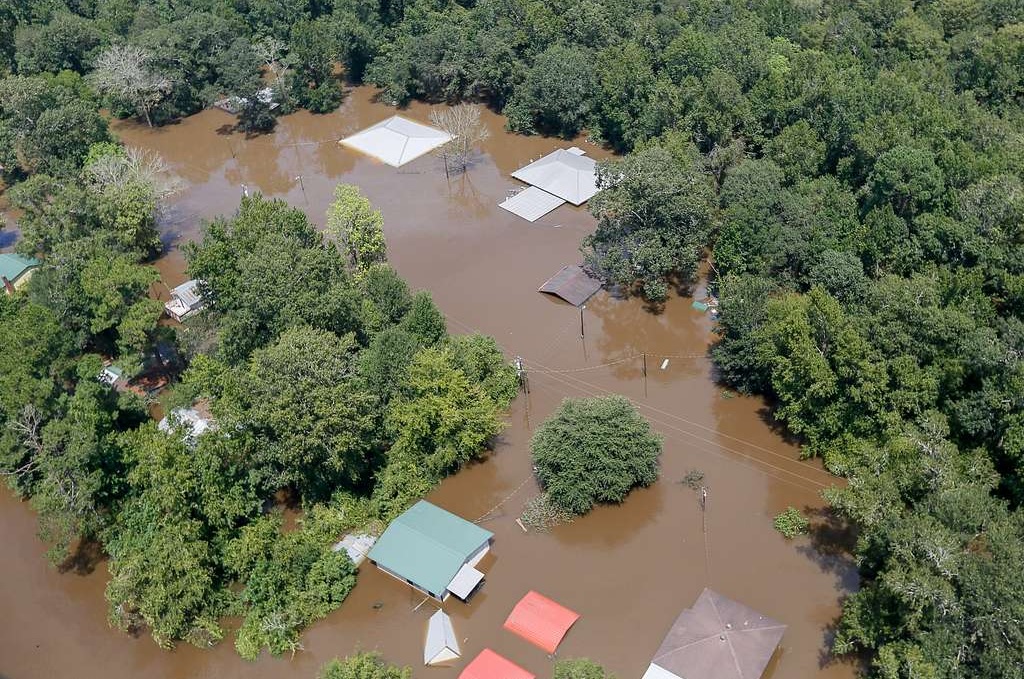 Flooding caused by Hurricane Harvey in Southeast Texas on August 31, 2017. Public domain photo by Staff Sgt. Daniel J. Martinez, courtesy of nara.getarchive.net and the Defense Visual Information Distributing Service. The appearance of U.S. Department of Defense (DoD) visual information does not imply or constitute DoD endorsement.
Sources:
Ted Perry, "Chief Seattle's Speech"
Sackett v. EPA
The Clean Water Act and the Army Corps of Engineers
Letters from an American: May 25, 2023
Current Implementation of Waters of the United States
Supreme Court Limits E.P.A.’s Power to Address Water Pollution
'Significant repercussions.' Supreme Court limits government power to curb water pollution
How Supreme Court’s EPA ruling will affect U.S. wetlands, clean water
Samuel Alito’s Assault on Wetlands Is So Indefensible That He Lost Brett Kavanaugh
U.S. Supreme Court rules against EPA in wetlands regulation challenge
Supreme Court limits regulation of some US wetlands, making it easier to develop and destroy them
Kevin McCarthy on Twitter
About Dawn Allen
Dawn Allen is a freelance writer and editor who is passionate about sustainability, political economy, gardening, traditional craftwork, and simple living. She and her husband are currently renovating a rural homestead in southeastern Michigan.