
Wet’suwet’en Solidarity Movement Growing
Wet’suwet’en Solidarity Movement Growing
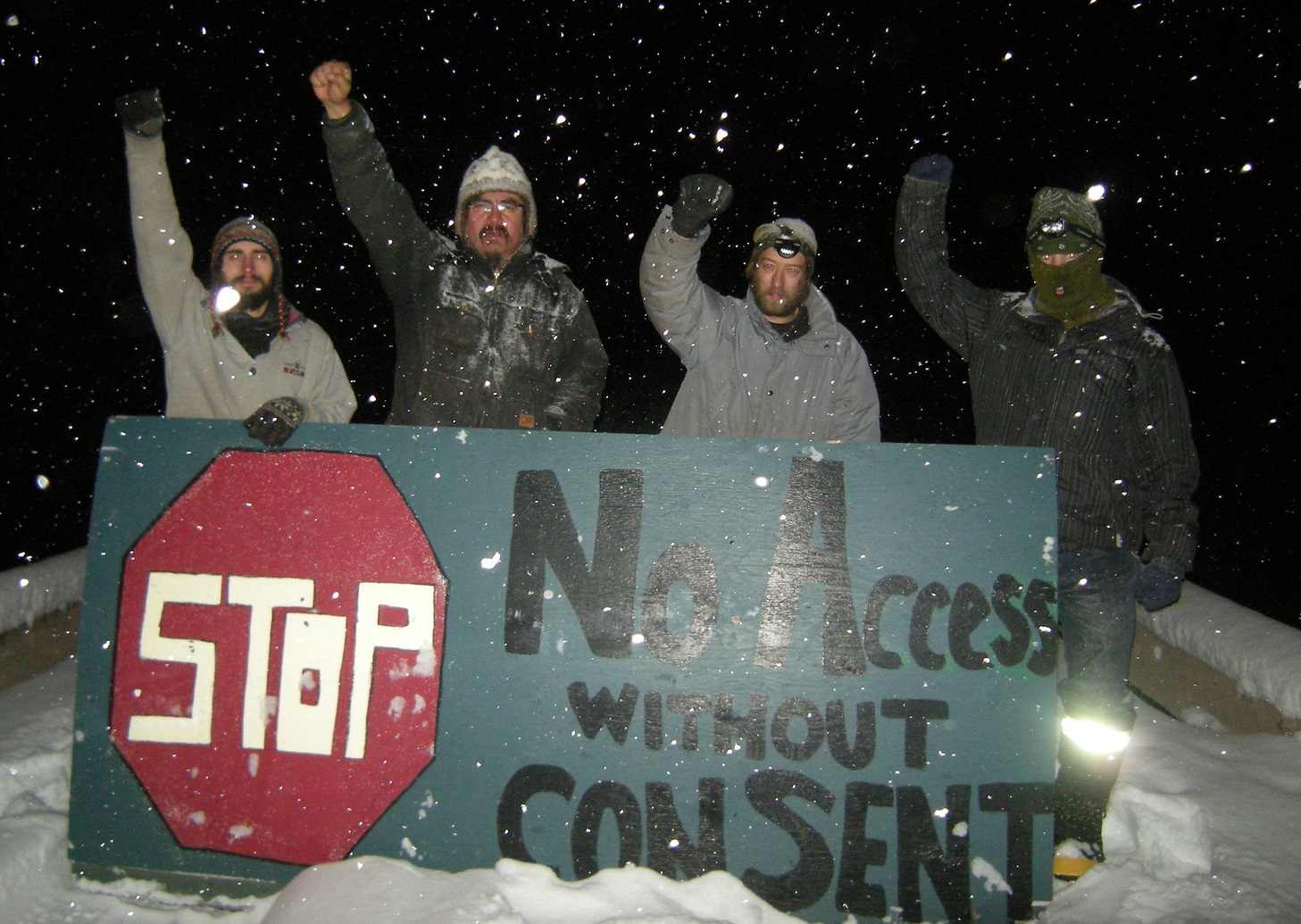
In British Columbia, Canada, roughly 700 miles north of Vancouver, a situation similar to the Standing Rock protest has been nearing the boiling point. Even calling this area “British Columbia, Canada” is a misnomer, since the Wet’suwet’en land in question remains unceded by any treaty. Age-old issues of Indigenous sovereignty and violent colonialism lie at the heart of the dispute between First Nations land protectors and the combined forces of oil and gas corporations and the governments that defend them.TC Energy, formerly TransCanada Corporation, based in Calgary, Alberta, Canada, is a major energy infrastructure company throughout North America. Coastal GasLink is TC Energy's C$6.6 billion pipeline project, begun in 2012 and intended to transport liquefied natural gas (LNG) approximately 416 miles (670 km) from the Dawson Creek area on the northeastern border of British Columbia to Kitimat, on Canada's west coast, where the gas would be transported by sea to Asian markets.About 118 miles (190 km) of the planned pipeline route crosses unceded Wet’suwet’en territory. The Wet’suwet’en are governed by two sets of leaders. There are five elected band councils, some of whom have signed benefit arrangements with Coastal GasLink, agreeing to the pipeline project. However, legally speaking, it's Wet’suwet’en hereditary chiefs who have the final say on the matter. After much deliberation, they have not consented to the planned pipeline route, which passes through culturally important sites and pristine ecological areas. Instead, they offered other potential pipeline routes through their territory, which cross land that has already been damaged by highway construction or flooding from an earlier Rio Tinto mining project. Coastal GasLink rejected the alternate routes, citing added length (and therefore cost and potential ecological damage).The Wet’suwet’en have resorted to a physical blockade of Coastal GasLink's operation. Two clans, the Unist’ot’en and the Gidimt’en, set up camps preventing construction of the pipeline. The Royal Canadian Mounted Police (RCMP) set up roadblocks and arrested land defenders, including Wet’suwet’en matriarchs as they were in the midst of a religious ceremony, to enforce an injunction allowing Coastal GasLinks workers to access Indigenous land and continue construction. The RCMP also threatened to arrest journalists for taking photos at the scene.None of this gives Canada a particularly great public image, especially as reconciliation with Indigenous groups for past atrocities looms in the political background. Learning that the RCMP were prepared to use lethal force to clear Wet’suwet’en people from their own sovereign land in order to make way for fracked natural gas, corporate profits, and inevitable ecological damage, has left many saying that the reconciliation effort is dead.
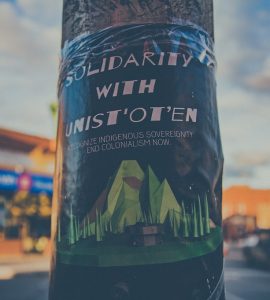 "Solidarity with Unist'ot'en" flyer photographed in Thunder Bay, Ontario, Canada. Photo by Tony Webster, via Flickr. Cropped. CC BY-SA 2.0
Sources:
Wet’suwet’en chiefs vs. RCMP: A guide to the dispute over B.C.’s Coastal GasLink pipeline
'Violations of Wet'suwet'en law'
Timeline of the Campaign
About Coastal GasLink
B.C. LNG and Fracking – News and Information
The Wet’suwet’en are more united than pipeline backers want you to think
Why Coastal GasLink says it rejected a pipeline route endorsed by Wet'suwet'en hereditary chiefs
In photos: Wet’suwet’en matriarchs arrested as RCMP enforce Coastal GasLink pipeline injunction
Lack of media access to B.C. pipeline arrests raises concerns
Reconciliation now includes heavily-armed police: Canada
Indigenous people outraged at Canada police's possible use of lethal force
Church leaders unite to support B.C. pipeline protest
Solidarity Statements
“This Is Insurrection”: #ShutDownCanada Action “Cancels Trains Nationwide” As Acts Of Sabotage Continue
Updated: Rail Blockades Could See Cities Run Out of Chlorine for Water Treatment
Vancouver port gates blocked by Wet'suwet'en solidarity protest
Canada: protests go mainstream as support for Wet'suwet'en pipeline fight widens
BREAKING: Police prepare to remove anti-pipeline protestors from blocking train tracks
Legal Information for People Attending Wet'suwet'en Solidarity Actions
Not a source, but satire worth reading: Trudeau: We must acknowledge the sacred sovereignty of Canada’s oil and gas companies

About Dawn Allen
Dawn Allen is a freelance writer and editor who is passionate about sustainability, political economy, gardening, traditional craftwork, and simple living. She and her husband are currently renovating a rural homestead in southeastern Michigan.