Why Understanding Debt Collection Laws Can Protect Your Finances
Why Understanding Debt Collection Laws Can Protect Your Finances
Understanding the laws that protect you from unfair debt collection practices is crucial. Familiarizing yourself with these regulations safeguards your finances and ensures fair treatment by debt collectors. In this blog post, we'll explore the importance of debt collection laws, key provisions of the Fair Debt Collection Practices Act (FDCPA), and how you can effectively navigate the world of debt collection.The Importance of Debt Collection LawsDebt collection laws are designed to protect your interests. They serve several essential functions:Safeguards Against Abusive Practices: These laws protect you from harassment, threats, and deceptive tactics used by some debt collectors. You have the right to be treated with respect and dignity throughout the debt collection process.Ensuring Fair Treatment for Consumers: By establishing clear guidelines for debt collectors, these laws help ensure that you're not subjected to unfair or misleading practices. You can feel confident knowing that there are legal protections in place to safeguard your rights.Enhancing Financial Stability and Security: Knowing your rights under debt collection laws helps you make informed decisions and maintain control over your financial well-being. You can take steps to resolve debts and prevent further financial strain.Ultimately, understanding and utilizing the protections offered by debt collection laws not only preserves your financial health but also contributes to a fairer and more equitable financial system. It encourages a balanced approach where both creditors and debtors can resolve their disputes in a manner that upholds dignity and respect for all parties involved.In New Jersey, residents frequently encounter aggressive collection tactics and high levels of consumer debt, which can overshadow their financial stability. These issues are particularly prevalent in urban areas where economic disparities are more pronounced. The concept of New Jersey debt relief has proven effective in addressing these specific financial strains, offering residents a viable path to regaining control over their finances and ensuring their rights are protected under the law. Key Provisions of the Fair Debt Collection Practices Act (FDCPA)The FDCPA is a federal law regulating the conduct of debt collectors. Key provisions you should be aware of include:Regulation Overview: This update to the FDCPA, effective November 30, 2021, clarifies and modernizes the rules for debt collection communications. It provides you with greater transparency and control over how debt collectors can contact you.Communication Guidelines for Debt Collectors: The FDCPA sets strict limits on when, where, and how often debt collectors can contact you. They cannot call you before 8 a.m. or after 9 p.m., and they must respect your request to stop contacting you.Prohibited Conduct by Debt Collectors: Debt collectors are prohibited from using abusive language, making false threats, or engaging in unfair practices like contacting your employer or family members. If you experience these behaviors, you have the right to take action.Rights and Protections for ConsumersUnder the FDCPA, you have several important rights that empower you when dealing with debt collectors:Right to Dispute Debts: If you believe a debt is incorrect or not yours, you have the right to dispute it and request verification from the debt collector. This puts the burden of proof on the collector to substantiate the debt.Validation and Verification of Debt: Debt collectors must provide written validation of the debt within five days of initial contact. This information should include the amount owed, the creditor's name, and instructions on how to dispute the debt.Protections Against Harassment and Abuse: You can demand that debt collectors stop contacting you, and they must comply. If you feel harassed or abused by a debt collector, you can take legal action to protect yourself.Understanding Time-Barred DebtsTime-barred debts have exceeded the statute of limitations for collection. Once a debt is time-barred, debt collectors can’t sue you to collect it, but they may still contact you. You have the right to request that they stop communication.
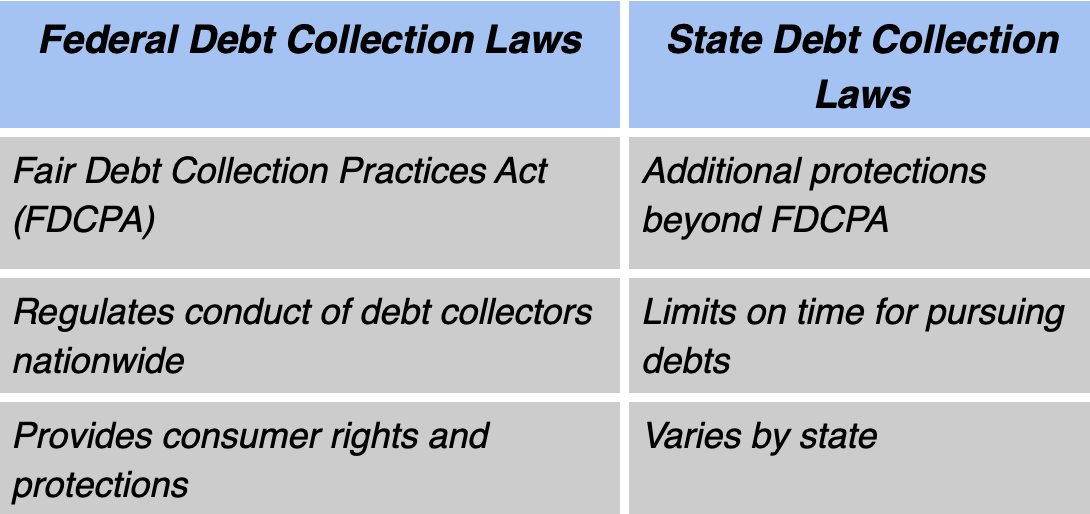 Federal and State Collection Laws; table by author.
Familiarize yourself with the Fair Debt Collection Practices Act (FDCPA) and your state's debt collection laws to understand your rights as a consumer.
Know that you have the right to dispute debts, request validation, and stop communication from debt collectors.
Keep detailed records of all communications with debt collectors and request written documentation of debts.
Seek legal assistance if you believe your rights have been violated or you need help navigating the debt collection process.
Take proactive steps to manage your finances, such as budgeting, avoiding debt traps, and maintaining good credit to minimize the risk of dealing with debt collectors.
What are the key benefits of understanding debt collection laws?
How can the Fair Debt Collection Practices Act (FDCPA) safeguard my financial well-being?
What should I do if a debt collector violates my rights under debt collection laws?
About Daniel Martin
Dan has hands-on experience in digital marketing since 2007. He has been building teams and coaching others to foster innovation and solve real-time problems. In his previous work experiences, he has developed expertise in digital marketing, e-commerce, and social media. When he's not working, Dan enjoys photography and traveling. LinkedIn