
Witch Hunts, Yesterday and Today
Witch Hunts, Yesterday and Today
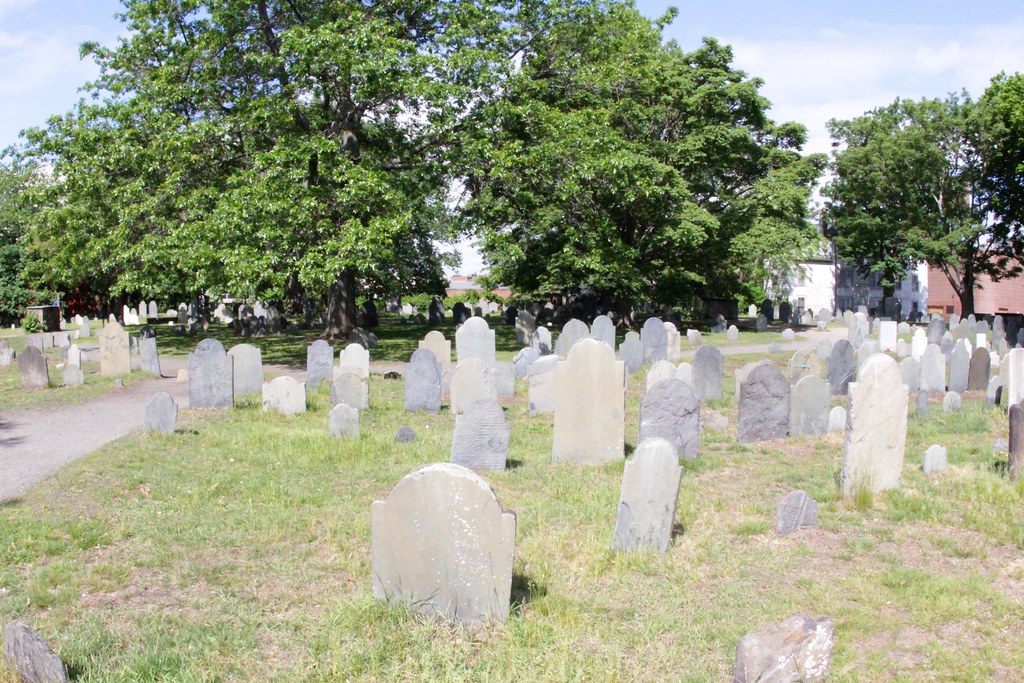
In a bit of justice so long delayed that one could be forgiven for considering it denied, Elizabeth Johnson, Jr. was exonerated and is, officially, no longer a witch. A victim of the Salem witch hunts, Johnson confessed to the crime of practicing witchcraft in 1692 and was sentenced to death.Only 22 years old when she was accused, Johnson was unmarried and childless, and was quite likely intellectually disabled, all circumstances that put a target on her back when it came time to look for scapegoats to condemn. Hysteria swept Salem Village, MA, in 1692; tensions in the community were running high due to the recent colonial war between Britain and France, a smallpox epidemic, fear of Indigenous attacks, and an economic rivalry with the more affluent nearby community of Salem Town. Something had to give, someone had to shoulder the blame. Humans can be like that.The witch hunts exploded in January. Two 'tween-age girls, kin of the local pastor, began acting up, contorting themselves and throwing screaming fits. The doctor said they were bewitched. Other young girls piled on, and before long, arrest warrants were issued for three hapless women – Tituba (the minister's slave), Sarah Good (who we would now call “housing insecure”), and Sarah Osborne (elderly and impoverished) – that the girls doomed with their accusations. Marginalized people. You know, the usual suspects, then as now.The two Sarahs denied any guilt. Tituba, knowing the deck was stacked against her and with a powerful human urge to save her own skin, confessed, then turned “informant” by accusing other women in the community of being witches, too. A chain reaction ignited; even toddlers and women considered upstanding were all tried for witchery. (It probably felt quite satisfying to smear the town's prissiest Karens, though.) Before the madness faded, 19 victims were hanged, one was tortured to death, and several more died in prison, all on the basis of “spectral evidence.” There was legal representation, cross-examination, protection from hearsay or presumption of innocence as there is today. The legal system, at least, has learned a lot from the witch hunts.
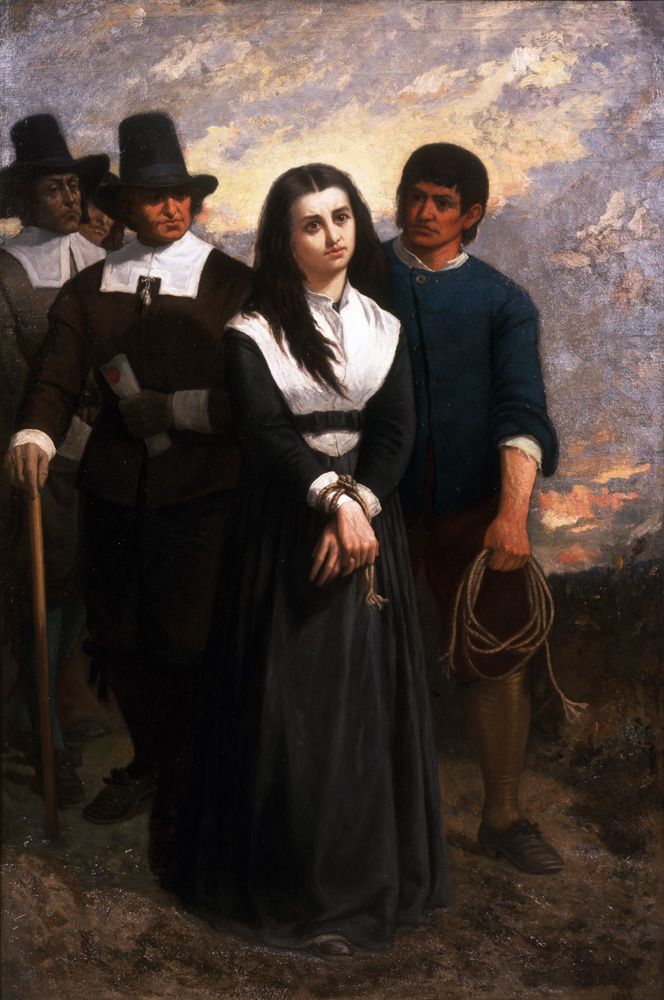 The Salem Martyr. Painting by Thomas Satterwhite Noble, 1869, courtesy of Wikimedia Commons. CC BY 3.0
Sources:
Last Convicted Salem ‘Witch’ Is Finally Cleared
Massachusetts Formally Exonerates Last ‘Witch’ Wrongfully Condemned During Salem Hysteria. Will Connecticut Follow Suit?
Last Conviction in Salem Witch Trials Is Cleared 329 Years Later
How the Salem Witch Trials Influenced the American Legal System
Salem Witch Trials
Imani Barbarin on Twitter
Biden administration declares monkeypox outbreak a public health emergency in the U.S.
6 Facts to Know About Monkeypox, the U.S.’s Latest Public Health Emergency
Evidence of surface contamination in hospital rooms occupied by patients infected with monkeypox, Germany, June 2022
“Jugendverführer and Jugendverderber”: The Republicans borrow another strategy from Nazi Germany.
What we know about how monkeypox is spreading — and what we still don’t know
About Dawn Allen
Dawn Allen is a freelance writer and editor who is passionate about sustainability, political economy, gardening, traditional craftwork, and simple living. She and her husband are currently renovating a rural homestead in southeastern Michigan.