
Worries and Lawsuits Mount as FDA Report Shows Alarmingly High PFAS Concentrations in Supermarket Food

Worries and Lawsuits Mount as FDA Report Shows Alarmingly High PFAS Concentrations in Supermarket Food
The federal Food and Drug Administration says it’s found substantial traces of a potentially dangerous non-stick chemical in grocery store meats, seafood and ready-made cake.The Associated Press indicates that the report is likely to escalate complaints already being made by states and consumer advocates. Collectively, they claim that the Trump administration isn’t doing enough to regulate man-made compounds.At particular issue are a class of widely-made, widely-distributed compounds called per- and polyfluoroalkyl substances, often referred to as PFAS.PFAS guidelines are sparse and hard to come by: the Associated Press says that, as of right now, the only regulation on PFAS dictates the extent to which it can be present in drinking water.However, federal toxicology reports suggest a potential link between PFAS ingestion and blood, heart and health problems. But the reports are tenuous—scientists say they haven’t yet concluded that PFAS is a definite cause of serious health issues.While the FDA has also shied away from saying its PFAS discovery is worrying, last year’s toxicology report at least “suggest[s] associations” between the compounds and various kinds of cancer and liver problems. PFAS may also impact and influence birth weights.
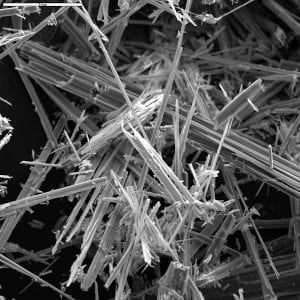 Asbestos viewed through an electron microscope. Schroeder and others have likened the risk from PFAS to asbestos--and even Vietnam War-era Agent Orange. Image via Wikimedia Commons/U.S. Geological Survey. Public domain.
Sources
FDA: Sampling finds toxic nonstick compounds in some foodStates take up PFAS fight: 'Is this the next asbestos?'
About Ryan J. Farrick
Ryan Farrick is a freelance writer and small business advertising consultant based out of mid-Michigan. Passionate about international politics and world affairs, he’s an avid traveler with a keen interest in the connections between South Asia and the United States. Ryan studied neuroscience and has spent the last several years working as an operations manager in transportation logistics.